Camera software is an area that is frustratingly closed off, and where manufacturers regularly differentiate new/more expensive cameras with firmware differences: subject detection, auto focus, drive modes (pre-capture, higher frame rates, etc), file format support (HEIC, compressed raw, colorspaces), ui features (how custom modes work, menu systems, etc).
Competition in this space driven by a provider that doesn't have a motive to convince users to buy the next new camera (ie: open source software) would be very useful to users.
Sony and Panasonic cameras (and perhaps other manufacturers) are running Linux (and release some of the third party source code they include in their products, but the amount of reverse engineering that has been done on those camera's software.
Canon uses a custom RTOS (DryOS), and lots of work has been done to extend the existing Canon firmware to enhance its capabilities (Magic Lantern[1] and CHDK[2]), but as far as I know fully open software for these devices doesn't exist.
Camera capabilities these days are highly software dependent, and the functionality of dedicated cameras is held back by subpar software development practices and a lack of pressure to make things better.
>Camera software is an area that is frustratingly closed off, and where manufacturers regularly differentiate new/more expensive cameras with firmware differences:[...]
Why is this frustrating? How is this different than anything else tech related that's in the business of making money?
Every company trims the features they give their customers access to depending on the amount they're willing to pay.
Camera companies aren't charities, they need to make money for their shareholders. All that sunk R&D has to be recouped.
This isn't just market segmentation. It's a frustrating, recurring theme among Japanese hardware manufacturers where great products are negatively impacted or outright hamstrung by shit software support. I run into it in embedded firmware and industrial controls all the time. I think it's a side effect of the corporate culture there, which is how it manages to cut into multiple market segments. Having to pass on good offerings because the software is too bad to stomach feels bad.
I get what your saying but how is their artificial firmware limitations different than Apple's own market segmentation practices? Or Google's? Or Microsoft's? Or Hashicorp? Or Docker?
It isn't different, but it's also not a clear comparison. Some differences are based on binning and calibration for example. Take sensors, silicon, power systems etc. which are all imperfect. Some product variation exists on purpose, while others are mostly just as a side-effect from the production yields.
Some segmentation is a bit extreme (Windows Pro etc. can use gpedit but Windows non-Pro can't...), while others are a matter of paying for a service rather than a thing. (i.e. Terraform FOSS locally vs. Terraform Enterprise in the cloud - you actually get a different product with different capabilities, not the same product with different things 'cut off')
Perhaps Intel is a good example in the hardware realm; some chipset and ECC variations are choices that are purely made so that server usage is highly discouraged. I would guess that some of that is simply a side-effect of R&D cost: you can't really have consumers foot the bill for extreme R&D, but you also can't make better chips without a very costly R&D process. So they might have selected a segment they know they can squeeze and put the specific features only in products for that segment. (One could argue that another perspective might be 'server' CPUs subsidising 'consumer' CPUs)
It's not always as simple as 'fake barriers for no reason', but because sometimes it really is, it gets hard to distinguish with is really annoying.
I think the frustrating thing is they can (potentially) afford much less to fund a competent software team, so the end product is much less than it could be. Which is unfortunate because of how good the hardware is.
It's frustrating because it's economically inefficient. It's also probably bad for the camera company's shareholders. It may be good for certain company employees - what economists call a "principal/agent problem".
Or perhaps the companies think they are not in a competitive market, and so can make more money by engaging in "price discrimination", where they try to charge customers more if they have more money (indirectly, via artificial software limitations, which they think has this effect). This seems unlikely to me, though. Customer "lock in" to one company's products must be pretty short-term nowadays.
If they treated cameras as a competitive market, they would be happy for software to be developed by others, if that's not their competitive advantage (and clearly it's not). They would make money from selling the hardware (cameras, lenses, other accessories). If they're the only company with open source software, they should have a big advantage when selling hardware, and could charge more for it.
It's frustrating because much better do devices that do things that no available device can do could be made available if was more open. It's different to say, computers, where Linux is available and can be customised to your heart's desire. It's not different to lots of other areas. Those are also frustrating.
It is frustrating when any company does it! Artificially software limiting features reduces the utility of devices across the board, which sees those devices going in to landfills sooner. All of the energy that goes in to mining, transportation, and manufacturing of the materials is less effectively utilized, so these practices lead to higher emissions, more waste, and more rapid environmental degradation. They also contribute to stratification of our economy, as users have to pay more money more often to get the features they need, raising shareholder profits off the backs of consumers.
This idea that we can manufacture something complex and then artificially limit its features to run profit seeking schemes is one that makes sense in a pure business sense, but in the end is often harmful to society. We don't have to do this. We could have a fully functioning free market economy even in a world where business norms involved open source software and open source hardware. Businesses would charge more for hardware but it would provide value to customers for so much longer, that down market customers could just buy used and get the same features they would have gotten if they bought a new, feature limited device from a closed source vendor.
"Then people would rip them off!"
No, then people would build off of their work and compete on other things like price or other features. We can see as a case study the world of open source 3D printers, where few vendors sell direct clones of other models, as they tend to use other manufacturing methods and change the design for their factory, adding differentiating features along the way.
"Then no one would invest!"
No, instead of less frequent large investments, you would see more frequent small investments - investors helping a factory buy one more machine to meet production goals for the next quarter with a new design no one has yet seen. First mover advantage is real.
Notably, even the libertarians at the Mises Institute oppose intellectual property restrictions, which are an artificial government monopoly on information, an extreme restriction on free markets!
OP's last sentence explains exactly why it's frustrating - because cameras are held back by subpar software. Why do you think being able to explain the root cause of this would make it any less so?
Magic Lantern is an awesome example of the value which can be created by collaborative open source, despite the hardware manufacturer doing nothing to document or help. It's great because it's also very low risk for the user since the firmware mods are loaded on every boot, the camera is never perma-modified reducing the chances of bricking the device.
I wish one of the major mirrorless camera manufacturers would decide to openly endorse an open source model as an optional alternative to their own factory firmware.
It's not just that they want you to buy new cameras (of course they do), but they also do it to protect different verticals within their company. If a stills camera can shoot video of the same quality but much lower price, then that takes sales from the provideo cameras.
That's a great point, and shows up in annoying ways in Sony's camera line up in whether "high frame rate" support exists. For Sony cameras, HFR implies "can capture a limited length (seconds, typically) of footage at a higher frame rate (240fps, 480fps, 960fps, etc) and reduced resolution as frame rate increases (this is not the same as normal video modes and S&Q video modes, which don't have time limits like these).
Sony includes this feature on cameras without interchangeable lenses (ie: "point and shoots"), and on their high end cinema cameras, but not on their mirrorless (interchangeable lens, but not considered cinema cameras) line.
Seems pretty clear this is designed to avoid their mirrorless lineup have a feature that might make it competitive with their cinema line. But they're ok including it on the point and shoot line because that already is well differentiated from the cinema camera line.
I've always given benefit of the doubt that the limited duration of S&Q modes in stills cameras is related to the max throughput of the recording media. 120+fps at 4K resolution starts demanding quite a bit of sustainable bandwidth. Shooting to SD cards might be a limitation and explains why the pro-video cameras have much more expensive record formats.
Is there any chance that some of this limiting has legitimate hardware reasons?
It's been over a decade since I really followed the digital camera scene.
At the time, DSLRs were just beginning to get 1080p/720p video capabilities. There were frustrating time limits of course, even then. But, I recall that some of the cameras heated up pretty significantly when capturing video. This was sometimes cited as a reason for such time limitations on video recording.
I'm not sure if that is possibly a "legitimate" physical reason for the limitation today, or if it ever was in the first place. Any thoughts on that?
Don't forget about the old 4GB filesize limit of FAT formatted devices from those early cameras. That was the hard limit not time. They would say time because they knew the bit rate and how long 4GB was in runtime. It was fancy cameras that would hit 4GB, and create a new file. It was fancier editors that would recognize that it was meant to be one clip and import it that way. It was the less sophisticated that would force you to "stitch" it manually or work with multiple clips.
It still is, and I think its legitimate still - the R5 can record 8K video but of course real time encoding of that is going to generate a lot of heat.
A Cinema body has a lot more room for heat sinks, and can more easily accommodate fans - you're a lot more likely to be using an off-body mic on the cinema body. And then you have a larger battery for the chips and recording time.
>A Cinema body has a lot more room for heat sinks, and can more easily accommodate fans
And yet, you'll still see cameras on hot sets with bags of ice around them because these heat sinks and fans cannot keep up. The original Red One was notorius for overheating. I have BMD Ursa Mini that was struggling in 105 degree temps. Big body does not mean over heating is solved. Personally, the camera that I've used that best handled heat was Sony's F55. Shooting interior of an old van with sun beating down through a window in the roof directly on the camera, 110 degrees inside the van (yes it was miserable), and the camera never once complained (unlike the cast&crew).
Hope at some point we can have un-crippled firmware for the 1D(X) series of cameras. Magic Lantern developers are acting like scared cats because allegedly someone at Canon said 'No'[1] and no one questioned it.
In theory developing third-party software for devices is legal if the 'finished product' does not contain material copyrighted by the original vendor.
My guess is a major client got pissed about this reported it ages ago it got no trancation. The client is currently super pissy about other things and mentioned this in their list of greivances and it gets fixed now because Nikon is worried that the client will go elsewhere.
One employee wouldn't have that much freedom to release patches like this. Or maybe he is an old guard that was annoyed by the time limitation and no one was able to say no to him
Don't forget it's a Japanese company. Which, as I understand, has a culture where people can't get fired, only promoted to positions where they do nothing and are out of people's way. Maybe it was one of those people.
Japanese companies are also stereotypically drowning in bureaucracy and have strict adherence to hierarchy. Maybe it was a manager that got annoyed and had an underling do it?
Sometimes, you just love a device and don't want to use something new. I still shoot a 5DmkII, and there's really only one feature that is available in the newer models that I'd love to have on my older body (specifically number of focus points). I've used all of the models after that including mirrorless, but this older body still my fave.
So the 10 year old camera isn't that strange to me.
Fax machines are still regularly used for business purposes in Japan.
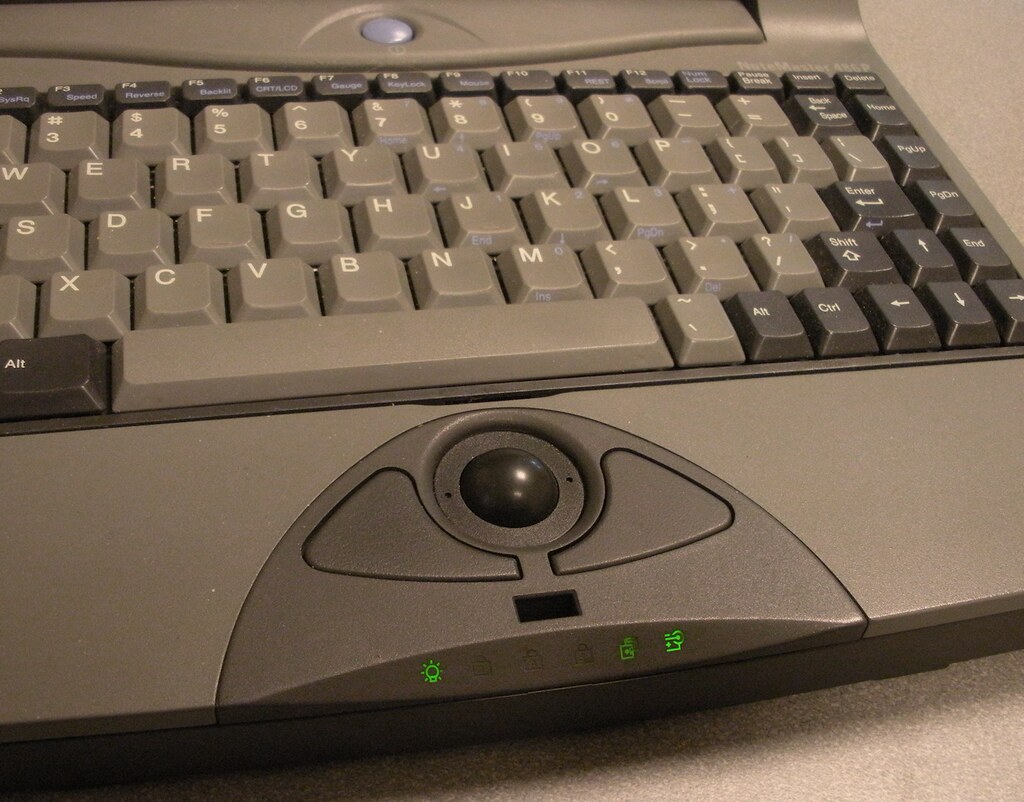
While uploading some trip photos at an Akihabara cafe in 2018, I noticed that my laptop at the time (a used Dell XPS from 2015) appeared significantly newer than the laptops of the other patrons. There were even a couple of integrated trackballs, which I haven't seen in a laptop since the late '90s. I also suddenly realized I was a bit under-dressed in a plain polo shirt and slacks.
Let's note has circular trackpad (It's traditional design, IMO it's bad now) so maybe OP mistook it for trackball. There's no laptop with trackball within a decade AFAIK.
I don't know if it's still true but at one point it was said that unlike in the US, the corner office was a mark of shame, because you go into that office, you close the door, and from then on your interactions with the rest of the employees are curtailed.
You get that office not because you've done things they thought were great, but because you've done things they thought weren't and they want you to slow your roll. You're a fish in a bowl.
Nikon D71000 DSLR here with 17-55mm on wall-mount, connected Elgato Cam 4k dongle, so this exact model with a solid lens is my current webcam. I had to adjust the exact setting mentioned there so it doesn't time out during long calls and it works great. I think I will skip this Super Important Firmware Update but I love someone's determination on getting it fixed.
It is a fine lens indeed, replaced in my wife's Z6 by even finer one, and thus rendered useless, except to make exceptionally nice pictures of me on zoom calls! Which I get lots of compliments about too.
Could also have been a task assigned to a junior engineer or something, to see how they handled such a project - one with real world stakes, but minor ones.
Alternatively, could have been a junior engineer doing it of their own accord, to show the bosses what they were capable of.
I am normally pretty good about updating firmware on stuff, but never even thought about camera firmware until this post. Sure enough my 8 year old Nikon has some updates. Including one from 2020, 6 years after it came out. Not the 10 years of this one but still impressive.
Nope. Not at all. Not sure where you got that info, but I would question that source.
It's because the CMOS sensors are much more sensitive to IR than our eyes, so they expose in that frequency range which causes the images to not develop the way we expect them. For astrophotography, lots of very interesting data comes from the IR bands, so removing the filter gets a lot more details.
It seems to me that this would be possible to achieve with any camera that captured near-IR wavelengths, with the appropriate filters or firmware hacks. In addition to what you posted, might this also be on camera makers' minds?
No. "Infrared" isn't a very descriptive term, since it means "the entire electromagnetic spectrum with energies below the human visual range".
Near-infrared is very close to the visible range and is sensed just fine by normal CCD/CMOS imagers, and they have to be specifically filtered to ignore it, otherwise it swamps the visible-color portion of the image. By removing the infrared filter, you lose color fidelity but gain sensitivity.
Thermal infrared takes a vastly different sensor, which is fiendishly difficult to manufacture, which is why thermal cameras are so expensive. Thermal sensors with certain performance characteristics may fall under ITAR, but you'd know if you had one of those.
Seeing this on the HN front page the day Nikon told me they did the necessary service and "repairs" on my 10+ year old D700 is purely coincidence I'm sure.
What a camera. Not surprised you had it serviced—if it’s a reasonably cheap repair job, that is still a great body if you don’t care about resolution. (And people put way too much emphasis on resolution.)
I swear that thing ran on fusion or zero-point energy. It could be nostalgia or just me being old, but I am sure it got vastly better battery life than my current mirrorless camera.
It's my dad's back-up body, I switched his D200 back im exchange and got a D300 with, IIRC a shuttet count of 30k-ish, as a back-up. Service was 90 bucks, sensor and mirror cleaning, firmware update, general service, AF and exposure config, laser callibration of the mirrors and prisms. Rather decent IMHO, I have yet to get it back, looking forward to it!
Battery life if great, during a full week in Iceland I charged the two batteries once, and propably wouod have made without charging. Resultion is, at least for me, only proplem when it comes to cropping. Not cropping in changing the format or to cut of the corners (the D700 viewer covers only 95% of the picture which can lead to some stuff at the borders of teh image you don't want there) but rather croppong out stuff like bird to enlarge them. Then, and only then, the 12 MP are an issue. Otherwise a lower resolution forces you sinpmy take better pictures in the first place. And for online use 12 MP are plenty anyway, I don't plan to print a house wall with my photos. And lower resolution means smaller files, which a benefit in itself.
I love that camera, if simply because it gave me back the joy of photography.
Putting 1k bucks in a lense is such better investment than putting the same in a camera body when it comes to image quality. Another benefit of a low resolution body, lenses don't need to be as absurdly good as they have to be for 24/66 MP plus bodies abd are correspondingly cheaper. Which leaves more money to travel to all those nice places to take nice pictures and enjoy yourself. Not that I would say no to Z9 with corresponding glass if someone gave it to me!
> It could be nostalgia or just me being old, but I am sure it got vastly better battery life than my current mirrorless camera.
Not nostalgia, DSLRs get vastly better battery life than mirrorless cameras. Because there is nothing using electricity in the optical path, you're just looking through the lens. A mirrorless on the other hand is constantly using power for the screen.
DSLRs always lap mirrorless cameras for battery life. There's practically no battery drain when its on until you actually shoot the shot since you are taking in light with a passive prism to compose your shot, versus the sensor having to be on and a display somewhere being powered with the mirrorless camera. Sony A7 shoots like 400 shots per charge. 5d mk4 lasts for twice as many shots otoh.
Definitely, compare to a DSLR which is only fully powered-on when your finger is on the shutter button. Otherwise it's basically asleep 99% of the time, if the screen's off.
I have a Fuji camera, and there’s a new firmware update available which ‘fixes’ a potential dataloss condition by setting the max number of objects to be stored per a DCF folder to be 999 from 9999.I haven’t yet updated since my workflow has a bunch of scripts which expected filenames per folder to be 4 digits.
I should update my scripts, but my immediate observation though were that this seems like a bandaid solution? And not sure if it even follows the spec, afaik it allows for up to 9999 _files_ per directory but some DCF objects can take up multiple files (eg a THM thumbnail and the JPEG).
The details on the bug are sparse too, how is MacOS not seeing data written to an SDXC card, is it corrupting it? Is it a filesystem limitation for 9999 files, or an actual Mac OS bug?
> Is it a filesystem limitation for 9999 files, or an actual Mac OS bug?
Wikipedia claims that exFAT supports 2,796,202 files per directory. So to me that reads like some sort of filesystem driver bug. Either the camera isn't following the exFAT spec correctly and by chance both Windows and Linux happen to tolerate that behaviour and macOS doesn't, or conversely there's some sort of bug in the macOS exFAT implementation.
You'd hope that in that situation Fuji would have double-checked its exFAT implementation, so maybe it is indeed a macOS bug?
Hey perhaps Panasonic will finally get their webcam software for their high end cameras fixed and take it out of beta (where it has been since the pandemic). In my dreams, they would also create a version for Apple silicon...
Just use a $12-$15 HDMI->USB capture card off eBay/Amazon. They work incredibly well and you don't have to deal with buggy software. I've been using my GH3 as a webcam since the beginning of the pandemic.
I have a Nikon D7100 and was just thinking about updating the firmware yesterday since there probably won't be anymore patches. I am pleasantly surprised by this.
They've added some keys to keep BR discs playing in recent updates, and apparently you can't create a PSN account from a PS3 anymore. There were "quality" and "performance" fixes until 2020.
It's my last console, the first was a SNES followed by a PSP. I used OtherOS but then upgraded anyway when it was gone. The Youtube/Netflix apps still work fine. I'm going try CFW one of these days on my early slim, just to know the temperature. https://www.psdevwiki.com/ps3/Thermal
I am surprised AACS still bothers issuing new batches of keys. Blu-Ray copy protection has been pretty thoroughly broken for over a decade now. The fact that most people no longer have optical drives on their computers is a bigger barrier to casual movie piracy than AACS.
Maybe was not an issue but a requirements. Many DSLR have live video preview and recording functionality limited in time because of EUROPE duty classification.
If the DSLR can do video without time limitations is considered a Camcorder, and so an higher import tax can be applied.
That hasn't been true for years: https://www.europarl.europa.eu/doceo/document/E-8-2016-00127...: "The Common Customs Tariff duties are fixed by the Council on proposals of the Commission. The Commission can in this context confirm that the product is part of the coverage of the revised WTO[2] Information Technology Agreement, which has been negotiated by the Commission. This means that the customs duties for camcorder will be removed after the revised agreement enters into force and thus in extension benefit EU consumers."
All camera companies should have removed their artificial recording time limits via firmware.
It's gotta be embedded stuff. The Space Shuttle GPC was constantly reprogrammed, including on the pad. They've sent patches to the Voyager spacecraft as recently as a few years ago [1]. 45 years, not too bad!
I've seen accounts of industrial equipment where the original microcomputers from the '70s/'80s have been replaced with modern microcontrollers or single board computers like the Raspberry Pi. Does it count as a "firmware update" if the new firmware comes with a new embedded computer to run it?
Good. Honestly DSLRs have gotten "more than good enough" for just about anything you'd throw at it 15 years ago. Newer DSLRs might be a little stronger in lower light but not by as much as you'd expect. Video capabilities are also a lot better in the new ones, but if you don't care about that, there isn't much you are losing buying a camera like a 5d mkiii (or even an older 5d) today. Unless maybe you are a pixel peeper.
This is great. I have a D5000 lying around, I've given up on DSLR photography on holiday since my iPhone is smaller and better at video and photography in dark places and about 10000x smaller and lighter, but I just couldn't sell my Nikon. Happy to see the company being dedicated to its customers after such a long time.
It has always been difficult to beat the Japanese when it comes to quality and service, and I am frequently reminded of just how seriously they take it.
I live in Japan and have to deal with Japanese customers on a daily base.
As they say here: "The customer is God".
Even one unsatisfied customer is going to destroy your reputation so companies are real careful here.
How does it work? What superpowers customers have in Japan, which they don't have anywhere else? Few years ago Sony had global week long outage, no one could play multiplayer, yet it is still a successful company.
It's more a cultural idea that you should treat/consider the customer very highly. It comes from the honour system of inner and outer circles. So conceptually the customer (honoured guest, okyakusama) outranks you.
So basically the signal-to-noise ratio in Japan is much greater than we are used to stateside, leading to actual problems being more visible and customer service departments taking them more seriously.
I actually just bought a D7100 on Craigslist for a few hundred dollars as an upgrade from my D7000. I've taken several thousand shots on it since and really like it. It's great for what it is - higher end APS-C camera.
Aside from no 4K video etc it feels like a thoroughly modern camera. The AF is good, the 24 megapixel sensor produces good raw files, the continuous shooting rate is pretty fast (though the buffer is small and can't shoot very frames in one blast), the design of the camera and layout and controls are very similar to the latest Nikon DSLRs.
I recently got a D300 for under 200 bucks in close to mint condition to go with tha D700 and replace the D70 with a scratched sensor. Great camera for my purpose, and the price left some budget for lenses.
> Never is too late. But, if they update = someone use this camera.
Cameras don't age like software or phones, this is why I like them.
A 10 year old DSLR like the Nikon D7100 (I have one) is still a very modern camera and it'll be good for a few decades to come.
(Sadly this is why good companies like Nikon struggle financially, since there is no forceful upgrade treadmill unlike for phone companies. But as a consumer I absolutely love being able to buy something solid that'll work for decades.)
My first camera was a D3100 in 2010ish, which I recently sold to a friend of mine for $100 and they are still taking fantastic photos with it.
I have a D750 I bought when they were new and that fucker still works fantastic, taking gorgeous photos with the right lens.
Even bought a D3500 cause I missed the little guy. Same sensor as the D750 (expeed 4) just DX format and worse AF. Weighs like a third of the D750 too!
I also have a Nikon D40 (2006) and it is still a perfectly great camera which I use fairly often. I only upgraded to the D7100 to have better physical controls. But I keep the D40 charged (charge lasts about 6 months) and with a small lens so it's ready whenever I want to grab a smaller lighter camera.
What's nice about that camera is that it will be good for even longer than a few decades to come if nothing otherwise falls apart. It will be good until you find the image quality unacceptable. Considering the image quality is already high enough to not be any limiting factor in most cases, I doubt you'd ever be hurting for an upgrade ever. The lenses too are unlikely to improve dramatically in the future. Lens designs at this point are 100 years old already because the laws of physics are sort of firm on what is possible. Autofocus motors are already plenty fast enough to capture a sprinting cheetah.
Once you are bought in, there's no point to upgrade because if anything it will be to spend thousands for marginal gains. Only worth it to pros who can spend thousands on gear a year as operating expenses for business where they bring in factors more with that equipment.
> It will be good until you find the image quality unacceptable.
As you said, probably never. There's only so many pixels the eye can see and the human eye isn't getting upgraded.
I have a print on the wall here which is 4ft wide, taken from a cropped section of a photo from my 24MP D7100 and it looks fantastic. Unless someone is printing out murals, there's no need for more and more megapixels.
Even with the low light abilities, its not like low light photography was impossible before the sony a7s.... You do things like use a tripod or monopod. You can bring in supplemental lighting. You can also hand hold a wider lens and get away with lower shutter speeds too, and pull up what you can in post processing from the raw file. Noise can be made to look a lot more like film grain using some tricks in lightroom.
I have one, and will update the firmware. Pardon my dumb comment - guessing whether they implemented some kind of upgrade where it has option to connect to wifi...
They are dead serious about supporting legacy stuff, and it long predates the advent of PR. They've been doing it for 100 years, and it's part of their DNA.
If you go to one of their service centers (there's a lot fewer of them, nowadays), in the back, you will often find camera bodies and parts for cameras that are fifty years old. They won't necessarily fix it under warranty, but they'll definitely try to fix it, if possible.
When 9/11 happened, they had cameras in the Melville service center from The Pile, covered with that dust, and they busted their butts to get them fixed up and back out there.
They are a very old company, and take their work seriously. There's lots of things to complain about, with them, but they are serious about Legacy.
I am still servicing my camera from the 80s and lens from the 70s with them. Nikon warranty in my country does not cover Internationally. But I am usually able to get servicing in every country even after out of the warranty period. Nikon waives my service fee quite frequently too.
Or the most probable thing is that someone internally was annoyed by the bug and got permission to release. A single update to a 10 years old camera on an apparently abandoned product line is not something that gets a big amount of PR coverage, especially since nikon DLSRs had very few updates ever. Unless it is part of an up-and-coming new updating scheme (which I very much doubt), it will not make much difference except a little goodwill from D7100 owners.
I think we can all agree it would be better if they issue press releases and advertisements when they want good PR. Fixing bugs is some underhanded stuff.
Nikon is pretty good at supporting legacy products, including repairs. Up to the point they almost are embarassed that spare parts are not available anymore. And hey, since their cameras routinely exceed predicted shutter life by a factor of two that is a good thing!
> This makes Nikon look like a company that supports all its products in the long term.
Not "look like", that's how they operate. I love it, wish all companies were committed to quality and longevity, it would be the kind of world I'd like to live in.
Nikon is also pretty obsessive about compatibility, I can mount lenses from the 70s on my D7100 and the features work.
Using a FTZ adapter you can those lenses on a Z9 as well. Not sure about image quality so, those old film era lenses seems, from what I read since I have zero experience, to underperform on modern digital bodies. Doesn't make the lenses any worse or the compatability any less imoressive.
There's a thin filter on top of the sensor of every digital camera that can affect lenses designed for film, but I personally only know of 1-2 lenses where it makes a marked difference.
In terms of underperforming, it's hard to define underperforming. Regardless of what some guy on a blog thinks, I have had many clients comment about how impressed they were with portraits I took of them with lenses from 1971 and 1993, and 0 complain about how the same lenses' corners look soft when shooting a test chart wide-open then blowing it up to 400%.
Couldn't agree more, the beauty of a picture cannot be meassured in a lab. That beinh said, apparebtly lab tests show that some old f-mount lenses don't use the full resolution of 36 MP plus sensors. Whether or not that is actually bad, or if you would notice the difference with the naked eye, is something different.
Thay being said, I'd never replace a lense unless it either broken or I see negative impacts on image quality. If none of that applies I don't see a reason to spend a fortune on new glass just because. Unless of course I want that lens.
Yes I agree, a PR for the company, not for the camera. Indeed is a good thing this support, for that I posted it. A firmware update for a 10y old camera, and a DSLR camera that also the lenses are discontinued. Well, I’m glad for it.


Competition in this space driven by a provider that doesn't have a motive to convince users to buy the next new camera (ie: open source software) would be very useful to users.
Sony and Panasonic cameras (and perhaps other manufacturers) are running Linux (and release some of the third party source code they include in their products, but the amount of reverse engineering that has been done on those camera's software.
Canon uses a custom RTOS (DryOS), and lots of work has been done to extend the existing Canon firmware to enhance its capabilities (Magic Lantern[1] and CHDK[2]), but as far as I know fully open software for these devices doesn't exist.
Camera capabilities these days are highly software dependent, and the functionality of dedicated cameras is held back by subpar software development practices and a lack of pressure to make things better.
1: https://magiclantern.fm/ 2: https://chdk.fandom.com/wiki/CHDK