I took an Uber during the tube strikes of London quite recently. They had a surge pricing that almost tripled fares. That's understandable.
I was speaking to the driver, asking about his opinions on Uber. I started the conversation assuming Uber gave him an opportunity to work. It was not exactly like that.
He used to work at a taxi company for around 30 years. Then Uber came. They lost a lot of business to Uber, because of the lower prices. Also it didn't help that the boss was the only person taking the calls and sometimes he forgot to tell the drivers that a job was available, or he just slept through calls. So the company shut down.
His son started working for Uber, and was very happy with it. So he started working for Uber too, but he said he was earning much less, and working more.
Also he complained that the customers would sometimes have a lot of luggage bags, and his previous employer allowed him to charge extra for luggage bags, extra people, or other "inconveniences". Uber doesn't. So he wasn't happy, but he doesn't have many options.
Uber seems to be making it better for the customers, and worse for the "old school" drivers.
Edit: He did mention that when driving for Uber, if he sees someone with lots of luggage bags or lots of people, he just doesn't pick them up. I guess Uber may eventually come up with penalties against that, if they haven't already.
I had boxes and I ordered an uber, done it before, used them a good 50+ times.
The driver turned up and said an "UberX" is just the person, nothing else, that's what the next one is for.
I've never seen any info telling me this, so this is Uber's fault I feel and I've chatted to the same type of people, they work more, but also they said, sometimes the controllers in London, send drivers around everywhere for a fair, whereas Uber it is perfect for people to pick in the same area.
So to excuse the phrase, it's all swings and roundabouts. I'd love to be able to pick up a black cab and maybe pay a little bit more as their knowledge far outweighs any gps alternative.
It seems as if though, as far as drivers go, companies like Uber are very much catering to this new phenomenon of Millennial aged people having multiple jobs to make ends meet. So they don't feel as obligated to pay as much as a Taxi service, or provide as many frills, since they probably assume its just a 'side gig' for most of their drivers.
This is good for some people, bad for others. No longer can you JUST drive a Taxi (or Uber). They've made everything a lot easier for the customer, and I would argue they have done a great deal to streamline things for the Drivers as well... But at the price of it not really being able to be a truly fulltime gig anymore.
You likely will still have to keep a second job to live comfortably in most Uber scenarios (depends on the city though)
I'd say it's more of a Millennial trend of devaluing labor and services. Napsterfication, I like to call it.
Who is going to argue with upending an industry providing a living wage to mostly immigrant workers to funnel all of the money into investor pockets instead?
Am I the only person who feels a little bit unsettled seeing the push towards the gig-economy mostly being made by genetic lottery winners? I don't know what to think anymore; it's hard to maintain the contradictions of pointing out wealth disparity, creative job demand giving fresh grads comfortable middle class lifestyles, and automating/undercutting poor peoples' jobs away.
What evidence do you have that the "Millennials" value labour and services any less than previous generations? Napster is a good example - most Millennials were barely teenagers when it closed down. The bulk of users were certainly older.
Who is going to argue with upending an industry providing a living wage to mostly immigrant workers to funnel all of the money into investor pockets instead?
This whole poor immigrant vs large tech company makes for good propaganda, but is there any evidence that Uber takes a larger cut than previous taxi companies? Being bigger is not evidence: they serve many more markets.
I don't think the millenials are devaluing their value, I think they are left without much of a chance.
The need for unqualified work in the modern world in dwindling and the young lack a way to enter the workforce. the huge supply allows employers to go by only hiring experienced workforce, and they don't even have to pay them top dollar, reducing any incentive to train youngster.
That's not great for the taxi drivers that get put out of work, since a lot of them work crazy hours - you talk to them and it seems they just drive taxis and sleep, not really time for a 2nd job.
I thought uber drivers not suppose to load your bags and you should do it yourself anyway? Why would you charge more if customers are loading their bags on their own? You only have to push a button to open a trunk that's it...
My experience has been the opposite, in the vast majority of cases where I've used Uber to/from airports (and that's a lot), the driver has almost insisted that they handle loading/unloading of luggage. Not sure if they're being courteous, it's for insurance purposes or they just don't want one of their customers damaging their car.
> They lost a lot of business to Uber, because of the lower prices.
I assume this isn't true for everyone, but for me, price is quite a ways down the list of reasons I prefer Uber to traditional Taxi service. If I'm at an airport, big hotel, or somewhere else with a taxi line, I'll take a taxi. Everywhere else, Uber is just vastly more convenient.
I'm only an occasional Uber (or taxi) user, which I suspect makes me less price sensitive than some, but my perspective is that the reason Uber is eating the taxi industry's lunch does not have as much to do with pricing or regulation as people seem to think.
> I assume this isn't true for everyone, but for me, price is quite a ways down the list of reasons I prefer Uber to traditional Taxi service. If I'm at an airport, big hotel, or somewhere else with a taxi line, I'll take a taxi. Everywhere else, Uber is just vastly more convenient.
Even if the hotel doesn't have a taxi line they usually have a strong relationship with a taxi company. I've had a taxi driver get woken up to drive me at the airport at 4am when no one was available because of those relationships. I can't get Uber to do that.
> I'm only an occasional Uber (or taxi) user, which I suspect makes me less price sensitive than some, but my perspective is that the reason Uber is eating the taxi industry's lunch does not have as much to do with pricing or regulation as people seem to think.
Given the number of times Uber has cut corners on regulation to enable that pricing...eh. I've honestly never found Uber worth using except to save money. It could be because I generally only use taxis for to/from airport<->hotel [or another business with a relationship with a Taxi company] but I've had far fewer problems with Taxis than I have the couple of times I tried Uber.
I finally, after many years, found Taxi service in NYC to be very, very good.
Then Uber popped up and the city is absolutely filled with car services. There's a million black cars on the road and yellow cab companies from New Jersey here. As dangerous as taxi drivers were, I've found these (as a pedestrian) to be much worse.
Then my experiences using Uber have been pretty bad -- from new drivers not knowing how the app works to people not knowing their way around Manhattan/Brooklyn and either _not following_ their GPS or blindly following their GPS. On one ride the driver tried to drive in a circle 3 times and then chose to take the battery tunnel (and pass along the toll) when we were next to the Williamsburg Bridge. I had one experience last week where I hailed an Uber and a drunk woman waiting for a cab jumped in and tried to get him to take her home. I explained to the driver that I was his fare and then he acted totally disinterested in the fact that she was in the car and had me deal with telling her to get out.
And now when I get in a normal taxi, my experience is much worse.
Uber is really great for two things: cost effective rides from NYC into New Jersey and the ability to summon a ride to your location. Probably the outer boroughs and Long Island are good too but I don't have experience with that. Other services are summonable and there's no reason that normal taxis couldn't be as well.
Honestly, as a midtown resident, I hate Uber in New York City. They drive dangerously on the road here and now it seems like everyone else is too (especially the tour bus companies and private sanitation services). It's lawless here in part because of them.
Seeing as my post is already unpopular, I'll get right to the point.
Over 2000 for-hire car services are being added to the streets every month in NYC. This is causing an unbelievable amount of congestion in an already crowded city. Within two years, the number of these will be double the number of yellow cabs we already have on the road.
The average speed of traffic this year was the slowest recorded - 8.5 miles per hour - and will slow further as we add more of these cars.
Actually taxis and personal automobiles do not create an equivalent amount of congestion. Personal automobiles tend to go point to point during several peak periods, after which they park and are off the roads. Commercial vehicles like taxis, on the other hand, are in service all day. Taxicabs, in particular, produce a lot of congestion since they're always stopping to pick up/drop off fares.
The money shot on this is that a single taxi produces congestion equivalent to about 40 personal vehicles, and a 15% increase in taxicabs reduces all traffic speeds by about 12% [1]. A certain level of taxis is a good thing, but they don't solve the need for an effective mass transit system.
A single taxi replaces several cars, so its unremarkable that a taxi "causes congestion equivalent to" many cars. You said a 15% increase in taxi cabs reduces traffic speeds by 12% but you didnt compare it with a similar increase in private cars.
The article did address that - the simulated "15% increase in traffic volume" results from adding either an additional 2,000 taxis OR the equivalent 80,000 private cars.
You may think that it's more socially optimal to have the taxi instead of the equivalent 40 private vehicles, of course. This is just speaking strictly in terms of congestion.
I live in Manhattan and use both Uber and regular taxis regularly. Never had any similar problem personally with either. The streets are always crowded. Instead of having no hope of catching a cab in a timely manner at peak times and places, now I have a shot at an Uber.
Since we're all pitching in anecdotes, I also live in Manhattan have very few problems with either.
I can get a taxi almost any time I need one. The times I can't, it's late on Friday or Saturday night and I just use Uber or Lyft.
I also use Uber to JFK simply because I get tired of hearing taxi drivers complain about going to JFK, demanding huge tips, or bitching about paying with cards. Taxi drivers usually give me no trouble, but to JFK, there is some issue at least 65% of the time. Never a complaint and always a smile with Uber or Lyft.
> As dangerous as taxi drivers were, I've found these (as a pedestrian) to be much worse.
Yes. When being a pedestrian, you just know that taxi drivers will not be polite, and you just let the taxi drivers pass before you cross the street, just to not end up in a life-threatening situation. However, with Uber, you can't tell whether it is a taxi cab, so the situation is a lot more dangerous.
At least Ubers here have to have TLC plates. If you're looking at license plates, they're much more identifiable...but if you can read their plate it's too close to matter anyway.
The places where New Yorkers own cars are also not the places that are congested with non-personal vehicles (except densely populated parts of Queens).
If congestion were the real issue, people would be talking about imposing congestion pricing rather than limiting Uber. It's a far more direct solution.
They have been. There was a talk from the city council about making EZPass and a toll a requirement to drive below 60th street in Manhattan but that's political suicide so it didn't go anywhere.
I had to take a taxi from San Francisco Airport recently. It was the first time I've been in a taxi in close to 4 years, and it was amazing. On the outside, it's the same looking taxi with the same Yellow Cab company.
On the inside, I've never seen anything like it. Interior was spotless and smelled nice. The driver was exceedingly polite, like a black car driver. They happily took credit cards using a NFC reader. Before that ride I was actively avoiding taxis, and now I'd take one in a heartbeat.
If you haven't taken a taxi in a few years, I think you'll find it really different from what you've remembered, at least in the Bay Area.
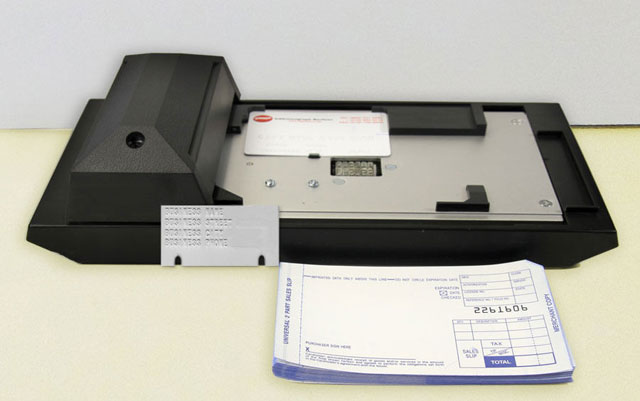
In San Francisco, just yesterday I took a taxi that reeked of the driver's body odor. A few months prior, I took a taxi where, after I got in, the driver said if I wanted to use a credit card, he'd have to put it through one of those archaic credit card copy machines [1], so I had to bail and find another ride. And on a regular basis (once per week), taxis in San Franciso which are definitely available drive right by me when I'm attempting to hail. In NYC, a cab would have magically appeared from around the corner; in SF, taxi drivers do not even appear to want to get hailed.
Some are good here. And on average they probably are feeling heat from competition. But many of them are still abysmal.
Well so ? That how competition works. If the taxi are getting better than Uber, not using because they used to be crap is the same position than people not using Uber because they are not the good old taxi.
As someone who doesn't often use taxis but often finds them the most pushy/unsafe drivers on the road I'll be interested to see if these other services improve that side of things.
Its particularly important for me when I'm a pedestrian because taxis/cyclists/delivery vans running red lights or taking corners too quickly are a relatively regular hazard that I'd be glad to be rid of.
Uber & Lyft may have safety problems, but at least the drivers aren't using Crown Victorias with poor seatbelts. Imagine if John Nash hadn't taken a taxi that day.
I don't know...regular vehicles have safety problems too.
What are the odds that fulltime Uber drivers are going to be taking their cars out of service for long periods of time to follow safety recalls? Given the patterns of service I'm seeing here in NY, probably zero. http://prospect.org/article/are-uber-and-lyft-driving-recall...
Rental car companies didn't do it. Three of them only pledged to do so in 2012 and the rest are being forced to by Congress as of this month.
Crown Vics are built like tanks (specifically the police interceptor and long-wheelbase commercial versions). Those transmissions last forever and can take abuse. Panther love.
I don't think this remark is appropriate, especially given that an UberX driver killed a 6-year-old about 2 and a half years ago, but mostly because Uber and Lyft have been around for only around 5 years at this point.
That's true, but it's dwarfed by the amount of data representing traditional cabs. If we're not just selecting for cases involving deaths, a string of cases implicating Uber drivers in violence against passengers[0,1,2] suggests - if nothing else - that the notion that Uber/Lyft drivers are qualitatively safer than taxis is false. And in the last case, it's clear that shortcomings in a system (namely, the thoroughness of background checks Uber runs) might have prevented such a turn of events.
3 cases of "uber"-violence does nothing to suggest "that the notion that Uber/Lyft drivers are qualitatively safer than taxis is false" without data from the dangers of riding normal cabs to compare it to.
The second was an attack by passengers against an Uber driver. What you can find multiple taxi drivers convicted of rape and kidnap just from the past couple of years.
It's really not a "taxi" based on experience growing up in Boston.
To me, a taxi was always a super unreliable, and usually outrageously expensive (and unpleasant) service that you might take once in a blue moon. I never based a plan around the idea of getting a cab, there had to be other options.
With Uber, I can now reliably plan on them actually showing up, on time, and to even outside central locations. So it doesn't just win against the competition, but actually expands my demand for the product because I'll factor it into my plans.
In Paris, taxi are making it worse in term of customer perception. For example, the last protest from taxi drivers that suspended the service UberPop [0].
I'm using Uber quite often, but mostly to get home from central London. I live in zone 5, and I rarely find one around there.
Unfortunately, a lot of the drivers are very unskilled. I once almost crashed into a fence that the driver somehow didn't see. Another time, the GPS took the driver to a dead-end road, so I had to tell him to drive back and follow the road. When I mentioned that he has to turn right, he turned right straight away, on the wrong side of the road. I almost collided head-on with another car.
Maybe I've been unlucky, but these drivers need to be evaluated somehow. I was reading Shortlist the other day, and apparently it takes more than two years and around 20,000 miles on a scooter around London to pass the black cab driver test.
I've used Uber from Zone 1-3 for the last few weeks. Some good experiences but I've had drivers with broken GPS asking me for directions, drivers who ignored Ubers GPS and used their own - which took poorer routes, and a driver who failed to understand a clear diversion and drove the wrong way down a 1 way road. On the other hand I had issues with fares twice (driver took an awful 'shortcut' and another driver cancelled after 10 mins and then surge pricing was in effect) and both times Uber quickly provided a refund (within hours).
Maybe Uber doesn't make the Taxi service better yet but it will. Having new competitors will force taxis to improve their quality. This is true for any industry: as soon as new competitors enter, quality increases and/or prices are getting lower.
What I like the most about Uber is that I click, wait (and in the meantime can track where is the car) plus I can use this application worldwide. If there was a similar, international app for regular taxis (including price estimate), then I would use it.
(Taxi claim that regulations are to keep quality. But my brother's experience with Uber is much better than with regular taxis.)
So, in short, while Uber is making it harder for regular taxi drivers (especially bad regular taxi companies), it makes it better for the users. If taxi companies catch (instead of: complain), it will be win-win (for drivers and users, not necessary - Uber).
Uber has made Taxi operators better for Indian cab drivers.
Pre-Uber (and Ola), operators used to pay drivers 60-90 days post. They would make arbitrary deductions, which the drivers could not protest.
Post-Uber, most drivers choose to go to Uber/Ola. Drivers say that the operators have cleaned up their act now. They pay 15-30 days post. They pay the right amounts, no deductions. In fact some drivers prefer to work with the operators..
The answer is No, per Betteridge's law of headlines.
The first thing article mentioned is lesser number of complaints in cab services. They present it as if Uber makes taxi better, but it can be that those who complained just switched to the Uber.


I was speaking to the driver, asking about his opinions on Uber. I started the conversation assuming Uber gave him an opportunity to work. It was not exactly like that.
He used to work at a taxi company for around 30 years. Then Uber came. They lost a lot of business to Uber, because of the lower prices. Also it didn't help that the boss was the only person taking the calls and sometimes he forgot to tell the drivers that a job was available, or he just slept through calls. So the company shut down.
His son started working for Uber, and was very happy with it. So he started working for Uber too, but he said he was earning much less, and working more.
Also he complained that the customers would sometimes have a lot of luggage bags, and his previous employer allowed him to charge extra for luggage bags, extra people, or other "inconveniences". Uber doesn't. So he wasn't happy, but he doesn't have many options.
Uber seems to be making it better for the customers, and worse for the "old school" drivers.
Edit: He did mention that when driving for Uber, if he sees someone with lots of luggage bags or lots of people, he just doesn't pick them up. I guess Uber may eventually come up with penalties against that, if they haven't already.