When my father died, he had a waking dream of this. Saw a river with all his dead family across the water. Smiling and waving. Coming to the banks. Waiting for him to cross. His last words were “Cover me in a blanket of sunshine.” He died two hours later.
What’s a little remarkable to me is that he had these visions in this detail despite being lifelong blind.
As I was reading the article, I kept wondering which came first. Humans having visions of loved ones? Or the religions and stories that posit a posthumous reunion? I was theorizing that the visions were shaped by the individuals’ religious beliefs.
The article offered one piece of evidence that my theory was wrong. The doctor claimed that almost no one saw Jesus or any other divine entity in their near death dreams. If this is universally true, then the religious beliefs about death & heaven are shaped in part by the dreams and not vice versa.
My late father had a dream where he said his brother had appeared before him beckoning him to come with him. He said I told him that I needed more time and he nodded.
A few days later with all his relatives around him who flew in from all over the country we had an amazing day and he was in really good spirits. The nurses finally told us that evening we had to leave for the day so he could sleep.
I was the last to leave the room and I heard him softly call out to his brother to say that he was now ready to go. He passed away sometime later that night.
My late grandmother used to see dreams of passed away relatives long before she died, as in decades. She told that she enjoyed having a good chat with them, and that the important part is to politely decline if they want you to follow them for whatever reason, as that would mean passing away. To her all of this was just common sense. Crazy to see it validated in actual research!
> "My late grandmother used to see dreams of passed away relatives long before she died, as in decades."
I am not a religious person but I can understand that. I am 66 yo and my father and mother are diseased since a long time. Yet sometimes I can feel a presence during day time and I had a few dreams where I discussed briefly with my mother.
It's easy to say that as I am shaking that this could be Parkinson's disease hallucinations but I am not so sure. Anyway I am not diagnosed with Parkinson's diseases and I take no drugs.
My pet explanation is that there are multiple universes and there are leaks between them.
Your mother was clearly important to you. Maybe you should go see a doctor re the shakes. I'm a recovering programmer who's now a professional musician in his late 30's, but just sayin'
I guess I was trying to add context to where I'm coming from. I obviously haven't lived that person's life, I'm just someone responding on hn. Hence the musician bit, too. Emotions are extra hard via this medium so I was shooting from the hip.
That would've been nice. If Kerr, as described, has had trouble presenting even his quantifiable metrics, polling his hospice patients and using statistics on the responses, to other professionals, I doubt there's a way to get published. Maybe an observation without a question?
    Eden Rock

    By Charles Causley

    They are waiting for me somewhere beyond Eden Rock:
    My father, twenty-five, in the same suit
    Of Genuine Irish Tweed, his terrier Jack
    Still two years old and trembling at his feet.

    My mother, twenty-three, in a sprigged dress
    Drawn at the waist, ribbon in her straw hat,
    Has spread the stiff white cloth over the grass.
    Her hair, the colour of wheat, takes on the light.

    She pours tea from a Thermos, the milk straight
    From an old H.P. Sauce bottle, a screw
    Of paper for a cork; slowly sets out
    The same three plates, the tin cups painted blue.

    The sky whitens as if lit by three suns.
    My mother shades her eyes and looks my way
    Over the drifted stream. My father spins
    A stone along the water. Leisurely,

    They beckon to me from the other bank.
    I hear them call, “See where the stream-path is!
    Crossing is not as hard as you might think."

    I had not thought that it would be like this.
The article gave me a new perspective on this poem. I had thought of the final line as the narrator's surprise at the way that grief affected them. But it could equally well be describing the narrator's experience of their own approaching death.
My eyesight started to deteriorate around the age of 7, and went completely away roughly 5 years later. I was always a rather visual person, but still kept my ability to visualize complex scenery roughly only for about 5 years. At the age of 20, every face I might have remembered was totally gone, nor was I able to crisply imagine things I used to know how they looked.
I don't really want to muddy your memory of your father, but I highly doubt he really saw the vision he described in the detail that you imagine.
More likely is that he found a way to translate his inner state in such a way that a sighted person like you could understand it.
There are always exceptions of course, and I dont know what "lifelong blind" really mean. But if it means what I think, I doubt that the ability to visualize complex scenery suddenly reformed itself just for that occasion.
Similar thought about religion being established around these experiences rather than these experiences being a result of religion as the direction of cause and effect.
The symbolic significance of boats in ancient Egyptian religion mirrors the river theme in a lot of the accounts with the sun god Ra travelling through the underworld at night.
I don't know if an update of N=1 will alter your posterior or not, but I have an uncle (not a particularly religious man himself) who had a 'dream' while undergoing risky surgery, that he had 'left', but saw his grandchildren praying to the Virgin Mary and the Virgin Mary interceded and sent him back. This is already weird, since, technically people don't dream while under the knife, unless the anesthetic has worn off. In any case, at recovery he was told there was a moment during the operation where he briefly 'died' on the table (whatever that means) but then spontaneously awoke and the surgery was smooth sailing after that. And it was indeed true that the grandchildren were praying to the Virgin Mary specifically at the time of the operation. I'm a bit fuzzy with the details because my information is second hand (my uncle's wife related the story to my mom, rather than me directly), but it is true that he had a terminal condition (I visited him in the hospital back when we thought he was close to going), the operation was not meant to be curative, only palliative, and yet somehow he's now completely cured and a changed man since that event.
In any case, not claiming this proves anything, of course; obviously there could be lots of explanations; but I remembered it because it does disprove the "people don't see religious figures in these visions" claim (albeit with an N=1). That's not to say I haven't heard of many similar accounts, but those had all been 3rd party accounts; this is the first time it came from a family member.
So people that dream a lot or remember their dreams will often dream about dead loved ones, This can explain why we would have a believe or hope that there might be something after death.
Also some people can feel they are not well and they will die soon, it is normal to then have visions or dreams about something your mind is obsessing. We do not have a number here , so I expect the percentage of people that have such visions or dreams not too be to big.
Some people tell about life flashing before their eyes, but for me when I had an accident and I thought I will die in that moment I just thought "fuck, what a stupid way to die", there was no flashes, but I was not injured too much so maybe those come after some chemicals are released in your blood.
Whatever is happening, it is sad to hear about yet another case where doctors are too arrogant to listen to their patients and try to understand. It might not be a spiritual experience, it might be delirium. But perhaps it is important step in the human mind making peace with death. And it disappoints me greatly that the medical community shuns this phenomenon and anyone who tries to research it.
There is nothing worse than medical elitism. It is very unprofessional, yet still a very widely practiced problem. Having been both a medic and an engineer, I can say that it's very common in both disciplines to have incorrect intuitions but some people are just too blinded by arrogance to look beyond them. In engineering, it often comes out pretty clearly if you are a poor engineer due to arrogance. In medicine, survivorship bias usually works against that. And if we're talking about people who have made peace with death, I am sure they won't fight arrogant doctors who dismiss them.
Overall, it's a shame. It is clear there is abundant research and evidence about end of life dreams. And this can be very significant in understanding our fear of death, and how people make peace with it. We are naturally very predisposed to fear death, so this is very important to understand. ELDVs are also probably culturally and philosophically significant. And we don't have almost any wisdom about them because of medical arrogance.
In defense of doctors, they are ideally supposed to practice based on evidence. That is the whole point of Western medicine in good and bad.
As a physician you might see people in your work that report these dreams and take it as a data point if it is very common. But what about people who see such dreams that don’t report them, or who aren’t even sick and it was just a dream, and most of all, who are sick and see such a dream but don’t die? What is the real statistical correlation between those dreams and death?
Any good doctor needs to be very skeptical about everything until there is properly gathered and assessed statistical evidence. It’s the opposite of being arrogant to require extraordinary evidence for extraordinary claims.
This is not a statement to dismiss end of life dreams. I think it sounds like this is a real phenomenon.
I disagree that a good doctor needs to be skeptical of everything until they properly gathered evidence. That is more a description of what a rigorous scientist should do.
There is a school of thought in medicine among some doctors (at least in Central and Northern Europe) that many patients know what’s wrong with them and one can go a long way toward a diagnosis by listening to and trusting a patient. Tests are used to confirm the diagnosis if possible, but they are well-known to be less reliable than the patients’ own experience (pains and other symptoms, for example). As an ex-medic myself, I strongly believe this is a more correct way to practice medicine, at least until significant advances are made in testing.
That is not to say that we don’t have highly accurate tests that will clearly indicate conditions (blood tests for IgGs, IgMs, BG, CRP, organ function, BP, ECGs, etc). But many conditions won’t show up reliably in common examinations and tests.
One of my old and wise doctor colleagues from a long time ago used to say that we live in the Stone Age of medicine — most of our tests and exams have very low specificity and we must treat a lot of people by what they tell us and our own subjective experience. He used to say that future doctors will see us as benevolent cave men who were constantly failed by our tools, unable to effectively remove illness and suffering, only really able to effectively listen and try to help, sometimes by just trying therapies until something hopefully sticks. I agree with them.
There is nothing worse than a distrusting doctor who dismisses the patients symptoms to instead blindly and arrogantly applies a schematic based on assumptions that our testing and examinations have very good specificity. That is just not the case for most diseases and violates the benevolence principle considered intrinsic in medicine by many. In my opinion, this is only acceptable for new doctors (like those still in training and under supervision). Otherwise, this behaviour is just malicious.
The science of medicine is very different from practicing medicine. The consequences of malpractice are deadly, and the time to treat a patient correctly is often limited. Scientists work in a much less constrained environment. Applying rigorous scientific method has relatively few negative externalities.
> There is a school of thought in medicine among some doctors (at least in Central and Northern Europe) that many patients know what’s wrong with them and one can go a long way toward a diagnosis by listening to and trusting a patient. Tests are used to confirm the diagnosis if possible, but they are well-known to be less reliable than the patients’ own experience (pains and other symptoms, for example). As an ex-medic myself, I strongly believe this is a more correct way to practice medicine
What evidence do you have to "strongly believe" this? It's quite something, to state that the patient does a better job diagnosing himself than the doctor does. In that case, there should be some evidence to that effect, to show that this is indeed the case? Otherwise, saying "I strongly believe" or "school of thought" is just a way of saying "I have a hunch".
> There is nothing worse than a distrusting doctor who dismisses the patients symptoms to instead blindly and arrogantly applies a schematic based on assumptions that our testing and examinations have very good specificity
What on earth are you talking about? Medical diagnoses are made using a variety of sources of information, including of course symptoms! What do you mean exactly "dismisses symptoms to arrogantly apply a testing scheme"? Maybe I'm misunderstanding.
Yes, possibly misunderstanding or perhaps I did not communicate clearly enough. My position is not extreme and speaks of the relative minority of medics who suffer from medical arrogance.
> to state that the patient does a better job diagnosing himself than the doctor does
This is not what I stated. I stated that listening to and trusting the patient helps arrive at a diagnosis more reliably than only doing tests. Sometimes it can even help arrive at a diagnosis more reliably than doing tests (for example, fungal infections can be seen or felt by patients more reliably than their cultures grow in the lab, and most doctors diagnose without a culture test).
> Medical diagnoses are made using a variety of sources of information, including of course symptoms!
Yes, but too often the diagnoses are made following algorithms or guidelines that don't suit many patients. A doctor is often required to follow the algorithms (and perhaps for a good reason), but should also know when they are not applicable to an individual patient.
My position is not extreme, although it's not mainstream either. There is a large body of research talking about medical arrogance specifically manifesting as doctors ignoring the patients. Likewise, many people in the field (at least in some regions like the UK) have experience dealing with colleagues who swear by algorithms (or worse — their own ideas) and are skeptical of patients who don't fit within them. This seems to be much less common in other regions. My family works in the medical field in Central Europe where, in my opinion, very few medics have issues with medical arrogance. I cannot comment on the US where I assume a good number of readers of this text are from, although academic literature indicates it's a global problem.
Would you like to make bonds with people that will soon die over and over again? I think many people misunderstand the kind of stress and mental strain that many doctors are subjected to regularly. Ironically, people who call for doctors to be more empathetic, often lack empathy themselves.
Also medicine is very broad field, it's probably hard to stay up to date in every new study. Especially that academic research is filled with less than ideal studies, so not only you need to read and understand them properly, you also need to make sure that source is trustworthy.
I'd have some empathy for doctors. They are doing what they are paid to do, which is extend life and improve its quality according to a given set of metrics.
Like most engineers, when there is a potential positive outcome that isn't captured in the metrics they are incentivized to improve, they shrug and turn their focus elsewhere. It doesn't mean they're happy about it, it's just not their job.
> it is sad to hear about yet another case where doctors are too arrogant to listen to their patients and try to understand
It's not 'doctors', it's 'people'. The width and breadth of the world is a greater challenge to our understanding than most of of are even able to comprehend. I suspect.
Very true. I was specifically talking about medical arrogance as a phenomenon, but of course, arrogance and choosing to remain close-minded is common in people.
Almost everyone could benefit from being more receptive, observing, and open to new ideas. The most open-minded people I ever met spoke most of how much more observant and receptive they would like to be.
> And it disappoints me greatly that the medical community shuns this phenomenon
The medical community is a joke as a whole. They even brush off side effects because they have never heard about them before. They are as unscientific as you can go.
Nowhere in hard science world do people act like that.
> The medical community is a joke as a whole. They even brush off side effects because they have never heard about them before. They are as unscientific as you can go.
I've had lackluster medical care before, but this is an extreme position. A lot of health professionals are dealing with life and death decisions on an hourly basis. I can understand how under those circumstances you'd be biased towards conservative and practical methods. Do what you know works; you don't want someone to lose their life, or have some horrible complication, because you think it'd be cool to try something different.
The complaint isn't about any particular treatment but rather about a lack of basic respect for patients. I once had a doctor tell me I was lying because studies show that only 10% of patients had that side effect. There are systems that are supposed to help find previously unnoticed side effects but I wonder how many doctors are actually using them when some have such strong reactions to known and not even that uncommon side effects. Of course, patients can also incorectly attribute something to a medication and doctors need to take that into account as well but repeated challenge gives a better idea. Some particularly strong effects, like that prompted the doctor's comment in my case, are rather obvious when they being shortly after starting the medication and stop shortly after the medication stops. Patients need to be ready to decline treatment if doctors aren't listening or there can be major, even deadly, results.
I have respect for doctors and their skills, but I don’t associate the guys actually running around in a hospital with hard science. They are factory workers, like programmers that produce widgets on a tight deadline. They have a metric ton of shit to handle under enormous stress.
I agree with the idea that medical doctors are not scientists, not even engineers. Yet I think it's impossible to do medicine as if it was a science: Most person is different from the next because their life events, and biology and medicine are incredibly hard.
For example we do not have models of human physiology, even if it looks something that could be computerized (there are efforts: dr Guyton's heritage, BioGears, etc).
Another thing is that we only had recently tooling to interrogate what's going on in our body: MRI and ultrasound. Yet no medical doctors (GP/family doctor) use them. At best they use blood analysis which gives an indirect knowledge. But if the doctor does not ask for the right analysis, whole health developments stay unknown until it's too late.
And many family doctors work with feeling more than with medical standardized practices: It's common that old family doctors say that they know what brings a patient as soon as they enter into their office. This is because of these "gut feelings" that we still have half of cancer cases that are discovered when they are metastasized (too late to be treated by oncologists).
Ok, I'll state the reverse opinion in the same stark way as you did: why should they? Their job is helping people who still want to live and can be helped. If someone is terminally ill and has made peace with the thought that they are going to die soon, there's nothing they can do for them anymore...
> Their job is helping people who still want to live and can be helped.
By this logic pain management is also unnecessary, because the patients won't (generally) die of pain.
It is necessary because understanding the process (1) may improve the quality of (remaining) lives of the patients, and (2) may actually help prolong lives, similar to the placebo effect.
We have made a system that has no room for seeking understanding. It needs to be fast, affordable, and without mistakes otherwise you’ll get sued, so everyone simply follows protocols.
Wonderful article, thank you for sharing. My favorite part:
> “Old couples,” Kerr writes, “have much to teach us about true love. Their bond requires no big declarations, loyalty tests, or dramatic endings.… They continue to feel and believe in it even when the person through whom that love originated leaves them. For elderly patients especially, their love for their other half is who they are. Jobs, ambitions, hobbies, mortgages, and plans have come and gone. What is left and what matters is the relationships they have maintained, cherished, and tended to through a lifetime of small gestures and greetings, loving glances and humorous words, shared stories and forgiven faults.”
This is somewhat romanticized. I feel like there are a lot of old couples (especially in the boomer generation) who are incredibly unhappy, but stay in their marriages.
I am as irreverent as you can probably get, in fact, if I have to say what I really think about religions in general, I am probably a blasphemer in every sense of the word.
Yet I believe this article. Because even I had a spiritual experience too real for me to discredit or brush aside, and I meant it not just mentally but physically too. It didn't completely change my views about religions, but it did soften my stance regarding beliefs since I realized how much it can help someone to believe in something. Even if in the end, it actually isn't real or has any deeper meaning, all that matters is the believer receives some solace. And that is enough good reason for it to exist.
The article mentioned that none of these dreams involved religious figures like Jesus but overwhelmingly had family members and people with close ties. Perhaps that says something about the "real" spiritual world that each of us instinctively understand. Or maybe it is nothing. I don't know.
> Yet I believe this article. Because even I had a spiritual experience too real for me to discredit or brush aside,
I've had dreams about things that happened prior to them happening too many times for me to discredit this. For example: Early on the morning of 9/11/01 I had a dream that I was in some kind of large, room-sized elevator (probably some kind of service elevator) in a very tall building. Suddenly the elevator started to go into free fall and I was sort of floating above the floor of the elevator. When it hit the ground I woke up with a start - I remember thinking that it seemed unusually vivid. Went back to sleep and a few hours later the events of 9/11 were all over the news. It was a weird feeling. I've had dreams about earthquakes that happened hours later (even saw a map of the location in the dream), dreams about married friends getting a divorce that soon did (2 different couples), even a very quick dream about my mom dying... the night before she did (she had been ill, but she wasn't considered ill enough to be hospitalized, it was completely unexpected).
Yeah, me too. Many of us have had dreams that were strangely prophetic, powerful, or both. I often try to think of it as the subconsciousness of the pattern matching brain managing to piece together something that the waking mind missed or too busy or afraid to dig deeper into.
But of course, it cannot explain everything. Like you said, there are sometimes dreams preceding events that simply can't be expected or explained in anyway. Yet it happened. Maybe it is a selection bias and we tend to focus on those dreams that hit the mark and forgot all about those that didn't. But still, these dreams were always too vivid for me to forget and I often forget most dreams.
I can't help but think there might be something more to our dreams, even though the analytical part of my brain consistently shouts this idea down every time I think about it.
Well, who else but for me? I make a living by thinking analytically about technical matters with sound logics and clear evidence. But that part of me wants to think about stuff that is completely opposite of what I normally do. So they are mad at each other. Kinda schizophrenic, I know.
But that is just human, right? Frankly, I would be more afraid of someone who never argue or debate an idea within themselves than someone who does so occasionally.
I have similarly experienced dreams (day dreams even) that seemingly predicted the future. Not discounting a possible spiritual phenomenon, but at least for me I reconciled these situations as being possible "memory falts".
E.g. one time I knew exactly what a friend was going to say before they even said it (phrase was long and unique enough to seem unlikely for me to just be able to predict it). Although it seemed my mind reading powers were happening in real time, experience of the moment only exists in my memory. So it is possible that my brain imagined that experience.
Maybe recording dreams on physical notes is the way to go to account for possible memory shenanigans.
Or indeed it could be that one can recall a dream that happened by chance to be analogous to a real event.
One does have to wonder if it is a case of us reconstructing the timeline after the fact. What we think as being the way it happened and how it actually did could be very different. But when it feels so real it can be hard to dismiss.
Semi related. I remember see someones story about how they would talk to god when on LSD, so one day they figured, get a note pad, ask what the meaning of life is and then write it down to study the next day.
They did that and all they had written down was "Walls." It felt so profound at the time but was probably meaningless.
> They did that and all they had written down was "Walls."
dude, that's deep
No but really, a lot of revelations I've had on trips, the extremely skeptic would disregard as nonsense, but I consider there's some sense there, only it comes from a different kind of lateral thinking and can get lost in translation.
If you think about it, even a single word, in your sober state of mind, carries huge amounts of information that we take for granted. If you shift those symbols around a bit, then you can have a single word like "walls" be the epic conclusion of a meaningful thread of ideas that you think is so obvious, you will be able to unpack later by just reading the word.
But while you were tripping, you're basically incapacitated precisely because you're devoting so much energy to following these symbolism labyrinths and then of course the trip is over, and the sober mind state has too many other background operations to worry about, so you can't "unpack" that meaning anymore.
Nah, one time I was startled by a phone ringing full seconds before it actually rang. The person I was around was startled by me reacting to it, because "nothing was happening", then the phone rang. Unless we both simultaneously falsely constructed that memory :) lol
Human perception is not fully accounted for. My speakers used to crackle right before my cell would ring. Could be something like that. Just because you can't imagine that someone's account as being real doesn't make it not so.
Thank you very much for sharing this. Without going much into details, you are not alone with this - there are people that have the same abilities. It is scary sometimes, and rarely can be used beforehand. Maybe you and these who has this experience often, are wired differently, and are more tuned to the Universe's radio than the rest of us...
The lift dream seems to be a common recurring dream, like no trousers or teeth falling out dreams. I've had it many times. It usually centres around a skyscraper and a lift shaft and the lift going higher or lower than it is supposed to.
My dreams have never coincided with any real-world events that I'm aware of. My dad has several stories about his dreams "coming true", though. I don't completely write it off as nonsense, but I do suspect there's a strong element of confirmation bias, some embellishment and the "broken clock being right twice a day" effect.
I find common recurring dreams really fascinating. I can understand the teeth falling out one as losing your teeth is a primal fear: you lose your teeth, you die. But no trousers, skyscrapers, lifts, school etc. are all learned cultural things and I wonder why so many people seem to place the same significance on them.
> The lift dream seems to be a common recurring dream
Sure, I've had falling dreams before as most everyone has - for me those are usually lacking in context, I'm just falling - often I find those transform into flying dreams. This one was quite unique in that I was in an elevator in a very tall building (I live in suburbia, I'm very rarely in high rise buildings, maybe once every 5 years). Also the physics seemed correct: elevator starts free falling, I push off the floor and appear to float in relation to the elevator, elevator crashes and I hit the floor. This is one of the things that really struck me about the dream when I woke from it - that the physics were correct.
My first thought was that this is random mumbling, but didn't down vote you. Then again, if it offers any consolation, my mother dreamt the exact same dream, 3 times, exactly the night before her close family member would die.
> I realized how much it can help someone to believe in something. Even if in the end, it actually isn't real or has any deeper meaning, all that matters is the believer receives some solace. And that is enough good reason for it to exist.
This, I think, is the most important thing that one can realize about belief.
We like to believe that we are 8 spirits in one body, because it makes us feel better about ourselves. It lets us feel more like individuals, who were meant to be who we are, and less like mere creations of a disordered brain... even though that's what we are.
Technically, we were never supposed to be multiple. We were supposed to all integrate into only one "person"... a singlet. But we did not. We split from each other and became "dissociative identities". We each have our own self-image, our own personality, our own wants and desires. Our own bodies, inside our head.
In contrast... using spirits to explain what we are, feels so natural and comfortable, so convenient. Even if we don't believe in the afterlife, or religion; even if we believe that the universe is deterministic and no spiritual realm really exists; even if we know that once our brain fizzles out, there is no consciousness left to experience what death really feels like.
There are no experiences left for one who has died. They stopped existing the moment after the last neuron fired. Consciousness can't be restarted.
Yet... we choose to believe that we each have our own souls because it represents something within ourselves that we struggle to otherwise describe. An opinion, an aspiration, perhaps even a wish.
Sometimes... we wish that our outside body represented even any one of our own, internal bodies. Our ideal selves. Our true forms, perhaps. But we are, mostly, content with being able to express ourselves on the internet... we are content with treating this as an act of spiritual self-expression. Where... physical form does not matter. Where we are not the body.
But we are only not the body... when we are souls. When we are just people, pure and unadulterated.
Indeed. There are many ways you can explain away these things without resorting to superstition. Trust me I know, I tried and still am trying every time I see these things.
It is hard to explain, but it is something that even though you can find an explanation that answer most questions, it still can't account for everything. And within those gaps are where I have doubts about whether I was actually right and these are just my mind playing tricks on me, or there is something more. Unfortunately, there isn't any concrete answer yet. We can't even definitely say why all things with a mind need to sleep, much less what happens in their dreams.
In the end, like I said, I have come to understand that it doesn't matter if it is right or wrong, as long as it helps someone, it is ultimately good enough.
I work in biotech and as I am sure you know, it is the field where unknown phenomena are the expected norms. So yes, I made peace with not being able to know everything a long time ago.
But by the same virtue, it means I can't dismiss anything unless I have concrete evidence against it. It is better to leave rooms for doubts rather than settling with a half-answer and consider it a solved matter. To do so would mean I am either supremely confident in my ability to explain something or I am unable to admit there are things that prove me wrong.
Agreed. I'm just confused why so many people are pre-facing their comments with some version of "I'm a life-long atheist but I can relate to this story somehow" as if there is a discrepancy between atheism and the article.
Of course it isn't. Believing there's a kettle orbiting Neptune is infinitely more implausible that believing there isn't, even though there is zero empirical evidence to either position.
Oh, thanks for that! As an atheist I always wondered what annoyed me so much in other more vocal and militant atheists.
I'd love to believe in God, a superior power, benevolent aliens, re-incarnation, anything! The problem is that I just can't, no matter how much I try.
"strong" atheists are asking you to treat your lack of belief like you'd treat any other thing you don't believe in - i.e. faires, fae, ogres, trolls, Babayanka etc.
I don't preface a comment on "those don't exist" by saying "well there's no evidence but..." because very obviously I don't live my life as though there's any probability they exist.
"I don't know god exists" is a meaningless statement because the alternative is not binary. You don't believe 'god' exists when you do, you believe a rather specific God exists.
> I'd love to believe in God, a superior power, benevolent aliens, re-incarnation, anything! The problem is that I just can't, no matter how much I try.
We have to occasionally remember that as an individual, the thinking part of us is but 6 inches across of jelly. To think that the brain can conceive and understand the entire function of the universe is somewhat laughable.
"I used to think that the brain was the most wonderful organ in my body. Then I realized who was telling me this." - Emo Philips
There's a difference between not knowing everything and inventing rather specific alternatives which you declare are valid because "we don't know everything".
Not knowing means not knowing. Not "well we don't know so maybe it's...".
It's also not "we don't know so maybe no black swans exist".
Knowing and belief are different things too. I don't know for a fact that the tree outside my house is still there when I'm not looking at it, but I believe it will be.
These discussions get muddy quickly precisely because sometimes you're arguing thinking that you know what the other person believes, which is a bit of an arrogant assumption, and then you're off having an argument with a specter of your own making.
It is nothing. It is always nothing. The "spiritual", the "religion" is always about hiding the politics in the mystery.
We didn't know we were on a planet and we believed meretricious speculators rambling on and on about the "genesis" of the sun, the moon, and the earth. We didn't know why and how were there so many kinds of animals around us and we listened to stories.
Nowadays we don't know how the brain encodes memories, how it retrieves them and replays them (memories are probably like a movie script and the brain replays them like a cinema [1]), and we don't know how this system fails to work when seriously decoupled, as in dreams, when damaged, or under psychoactive drugs. We know roughly how anaesthesia works by blocking signals, there is nothing magic in being under anesthetic drugs and waking up from anaesthesia; it's a procedure done daily thousands of times across all the hospitals in the world. Camillo Golgi showed us the neuron merely 152 years ago [2]. Give it 150 more years and all the current "mysteries" will appear more or less ridiculous.
[2] 'In 1871, a German anatomist Joseph von Gerlach postulated that the brain is a complex "protoplasmic network", in the form of a continuous network called the reticulum. Using his black reaction, Golgi could trace various regions of the cerebro-spinal axis, clearly distinguishing the different nervous projections, namely axon from the dendrites.', https://en.wikipedia.org/wiki/Camillo_Golgi#Nervous_system:~....
> Give it 150 more years and all the current "mysteries" will appear more or less ridiculous.
My bet is in 150 years we will have even more questions, and maybe one or two solved ones.
Let’s look at history. If you were blind 500 years ago there was no cure. If you are blind now, while the life conditions might be better (guide dog, support from organizations) there is still no cure. We really do not know much.
Science is great, but, ironically, this blind optimism in it smells of religion. An old idea, not mine, from Nietzsche.
There is no cure for blindness? What kind of blindness? Even a popular entertainer made news when curing 1,000 cataracts with a today's standard procedure. How would cataracts be cured 500 years ago? Bloodletting? Very soon (10 years, 20, maybe more) we will be able to restore full eyesight, even regrow eyes [1], and beyond.
But sure, cling to dusty metaphysics while sending messages at light speed across the entire planet with a detour in Low Earth Orbit using materials which were invented 116 years ago [2], it's your privilege.
> But sure, cling to dusty metaphysics while sending messages at light speed.
I do not understand what you mean by dusty metaphysics. I am guessing you mean religion? I can criticize science without endorsing religion. It is not either or. If that is the case, I believe you read into my comment things I did not say.
I already said science is great. At the same time, we hardly know anything. These are orthogonal. We are a bunch of apes on a rock in the middle of space.
Replacing religion with science is what (one of the things) Nietzsche was talking about. What a better example, ironically, that not being able to criticize Science.
In a funny way, by dusty metaphysics I actually meant the great Swiss philosopher Friedrich Nietzsche.
In Genealogy of Morals he has quotes such as "Science is not nearly independent…, in every respect it first needs a value-ideal, value-creating power, in whose service it can believe in itself,—science itself never creates values." [1] using the word wissenschaft for science, knowledge-making, translating literally the German word. The point was that we are already beyond any dreams Nietzsche could have imagined, the dichotomy religion/science was merely a cultural artefact of the Enlightenment. Hence the replacement you mention is not even an issue.
As for "hardly knowing anything", just looking at the front page of HN right now: we are discovering new water sources on the Moon [2], new primitive cells [3]. We are improving, however knowledge is not about totality (omni-scientia, as the religious terminology would put it). Even if we were to condense all the knowledge in one place, hoard it, it would only collapse into a black hole, our universe is rather limited. Knowledge is about principles: we will never again have to worry about the sun not rising tomorrow because we made the god of Sun angry (although we should worry that the Sun will evaporate Earth in a few billion years, so I suppose Nietzsche has his point [4]).
[4] 'Once upon a time, in some out of the way corner of that universe which is dispersed into numberless twinkling solar systems, there was a star upon which clever beasts invented knowing. That was the most arrogant and mendacious minute of "world history," but nevertheless, it was only a minute. After nature had drawn a few breaths, the star cooled and congealed, and the clever beasts had to die.', 1873, F. Nietzsche, On Truth and Lies in a Nonmoral Sense
Thanks for the detailed response. I will try my best to answer.
> science itself never creates values
I did not say I agree with Everything Nietzsche says. I disagree on that one.
> The point was that we are already beyond any dreams Nietzsche could have imagined, the dichotomy religion/science was merely a cultural artefact of the Enlightenment. Hence the replacement you mention is not even an issue.
Why are we already beyond any dreams Nietzsche could have imagined? You state it as fact but do not justify it.
The Hadron collider has not discovered many of the things people were hoping to. Mathematics optimism was demolished with Gödel. If anything, it feels like we need to put more and more effort to get less and less progress (diminishing returns).
IMHO it is fine, what else can we do, but I don't think it is a situation to brag about. This naïve positivity that Science will solve all problems _is_ the cultural artifact of the Enlightenment. By now the optimism has faded. In 150 years no more illnesses? Who can believe that, if we are not all dead from the environment or nuclear war.
But most importantly:
> As for "hardly knowing anything", just looking at the front page of HN right now
If instead of looking at hn we go to a hospital it will be obvious how little we know.
On Nietzsche's dreams, I guess ibuprofen comes to mind (discovered in 1961 by Stewart Adams and John Nicholson). How many of his headaches would have been easily relieved with just a pill. Chemistry was the fundamentally transformative science of the first part of the 20th century, Better Living Through Chemistry [1] and all that.
And Nietzsche knew that chemistry was the future, it was in the air. "In a letter of January 1869 to his close friend Erwin Rohde, Nietzsche, reflecting wryly on the vicissitudes of fate, breaks the news that has just intervened to dash their common 'dreams of a Parisian future': 'just last week I was going to write to you and suggest that we study chemistry together, that we throw philology where it belongs, among the household effects of our forefathers'" [2] However, he doesn't pursue chemistry, "In commenting on this same episode of 1869, Mittasch muses: what if Nietzsche had carried out his plan and begun studying chemistry, for instance with O.L. Erdmann and H. Kolbe in Leipzig: would we be counting him nowadays among our great German chemists?" [2], as we know, he falls back into philology and publishes The Birth of Tragedy in 1872. Incidentally, in 1869, apparently in one day, February 17, Dmitri Mendeleev conceived the first periodic table of the elements [3]. No one could have guessed the power that lies in those scribbles, and that's the point: if Nietzsche could have dreamed all the polymers and drugs of today he would have forgotten Greek and Latin.
Yes, in physics, plenty of "low hanging fruits" such as general relativity or black-body radiation have been picked early. The incompleteness theorems have crushed the mathematical optimism for only 5 years, from 1931 to 1936, when Turing showed that even without an algorithm to solve the halting problem, you can still build an computer, as we are well aware.
Hopefully not even 150 years to cure all illnesses, I'm hoping for 50 because, you know, the clock is ticking. The source for this hope is the work that is being done in regenerative medicine and in programmatic tissue control [4].
We're beyond what he imagined in technology and material possibilities, but not even close to other more human values.
The fact that we are both using this amazing technology of "light speed" information exchange to engage in these discussions fully knowing that most likely nothing will change on the other end, should tell you something about how far we've really come.
First of all, I am believer that language was not invented for communication, dogs and bees communicate very well with each other and don't speak one word, but that language was invented to speak with and to one's own self. No source for this, just a belief: I first of all speak to clarify thoughts for myself, hence expecting for communication to "update the software" of the other person just seems misguided.
Secondly, we are what we make of ourselves, nothing more, nothing less. We are a "land of laws" or a race to the bottom. José Saramago's fiction "Essay on Lucidity" and "Essay on Blindness" puts it in counterbalance more poetically and at length.
Thirdly, technologically, we still haven't moved one inch towards the tools for wisdom. What do we have now? Books of ancient elders, books of contemporary charismatic thought-leaders, books of law, "words, words, words", as the Danish prince would put it. How about, as dystopian or utopian that might sound, reinforce "do not kill" not with a stone tablet and the fear of consequences, but with a pill. Robert Sapolski [1] comes to mind: how barbaric we will look like for locking a murderer in a cell instead of fixing whatever neuronal pathway goes haywire. Nevertheless, this future will come, maybe not in the next 100 years, who knows, but that's why it is important for there to be a we, the people, collectively sorting things out, choosing our own local and global state, and not a them, the rulers, whomever them are, political leaders, religious figures, charismatic entertainers.
The first paragraph, although an interesting theory, is odd and almost self contradictory. If you don't expect anything to come out of interaction, why not just type your responses into an offline journal for yourself and keep it at that? I do this often for my future self and highly recommend it. But if I interact with others I try to be honest with my intentions.
I can't say I disagree with the rest of your comment but i barely see the relevance to the topic of Nietzsche and how you seemed misguided in confusing his vision of the future with our current technological advances.
Having done 8+ years of regular meditation, after getting inspired partly by an HN post [0], I can say with certainty that we're more than the body. I live with constant sensations, which are profound when I meditate. Building up from the bottom of the spine, where the kundalini is said to be sleeping in yogic scriptures for most folks.
Having seen my arm split in two, being unable to move it for a year, and slowly and painfully starting to regain control over it, I can say with certainty that we're less than the body, that we are some "strange loop", an information processing algorithm, shaped by memories, which is most probably substrate-independent, but for now stuck in the body of a tailless primate. Funnily enough, in my wounded arm I also have constant sensations and even today, although less pronounced, when I move it, I feel more like I am controlling a robotic arm through a joystick rather than something which "is" me or mine.
Your opinion is based entirely on the assumption of materialism.
We used to think the earth was the center of the universe, we learned it's not.
We used to think the earth was the center of the solar system, we learned it's not.
We now think that the brain is the center of consciousness.
The trend is usually in breaking away from the idea that we're special, not in reaffirming what we already assume.
In this case, the assumption is that our brains are special. The breaking away would be understanding that the brain is not the center of consciousness, but that we're a part of something bigger, something which does not look like what we assume or imagine.
That means that future knowledge will likely not look like it is reaffirming any particular religion, not will it look like it is reaffirming the current popular fundamentalist materialist view.
I remember a short quip, perhaps from Marguerite Duras, "all these people speak about materialism, yet they barely know what matter is". I linked below how the atom is mostly empty, here is a chart of the elementary particles with the three generations of matter and anti-matter [1], and here is a hydrogen wave function just because it's beautiful [2]. You tell me to what kind of "materialism" do I belong to. Perhaps I am too "tau-onic", or maybe too "anticharm-ic" (I am the first to say that the particle names are just awful, naming things is hard, naming the constituents of things is impossible).
I have seen people dieing, dear people. I don't care if they went "somewhere", I just care that they are no longer here. And if they were to choose, they would still choose to be here and not go "somewhere", wherever and however it may be. Nevertheless, looking at the facts sober, without any glam or fantasy, they went nowhere, just like when they've fallen asleep a thousand times beforehand. And it is very disingenuous, childish, and hurtful to pretend otherwise.
The brain not being the center of consciousness is just ridiculous. I hope you don't think our feet are the center of consciousness, because we would have then some zombie amputees. But if you believe it to be out there, in the universe, put some glasses of wine in front of you, or whatever alcoholic beverage you fancy, then ask yourself why do you get drunk only after you ingest them (Not condoning alcoholic intake otherwise as mere experiment, for the science).
Our brains are special insofar as they are able to give rise to an agent, as opposed to a rock, just sitting there. If on some distant planet there is also a similar in effects object, then sure, that object is also rather special.
materialism refers to the belief that matter comes first, and that consciousness and experience came after millions of years of matter developing into life and life evolving and so on.
I'm not denying this is a reasonable possibility, or that you're wrong or crazy to take that assumption. What I'm saying is that that's what it is, an assumption. Too many times materalists forget this.
The discussion of whether we "go" "somewhere" when we die is complicated, in part perhaps because you're assuming that anyone that questions whether there's total annihilation of experience after death, you assume those people believe some preconceived notion such as heaven, ghosts, etc. And probably operating on assumptions about what we mean by "we". For example, our bodies don't disappear when we die, the matter that composed them is still part of the world, it just spreads and loses the recognizable pattern of "John" or whatever. I see no logical reason why the same can't be true for the mental faculties. Why would information simply disappear into nothingness?
Wine has an effect on the mind because there is an obvious interaction between matter and experience. If you are driving a car and I throw dark paint at the windshield, that will affect the operation of the car even if I don't affect you directly. The fact that your driving is affected does not mean that you are the car.
As for the brain as the center of consciousness, that would be akin to believing earth to be the center of gravity, without understanding that gravity can act in less obvious, more subtle ways across the universe. But we have no way of measuring consciousness objectively, and we possibly will never have, and this is why I think it's important to highlight how many of the things people take for granted about what we are and our place in the universe, are assumptions and beliefs, not facts.
Classic atheistic arrogance here. Our understanding of the brain may be transformed, but had it occurred to you that when you dissect things you begin to miss the wood for the trees?
I am not even a nihilist, but sure, after nihilism will destroy the lives of people for 2,000+ years, I will agree that it's more absurd than any religion. So far, the great religions of the world, Hinduism, Buddhism, Judaism, Christianity, and Islam, needed thousands of years to realize that slavery is not really a great idea, and some are not yet convinced, but are pressured by those dissecting atheists to repress their true nature: oppress, admonish, control.
And to think you can't appreciate the beauty of the world just because you understand it, it's simply mind-boggling. Given how much I appreciate a computer program about which I know every nook and cranny because I developed it from an empty text file, I would venture to say: only if you fully understand something you can start to appreciate its beauty, start to be responsible for its future.
(Also, the expression "it is always nothing" is full of poetic vim given how atoms are mostly empty space and how the universe itself is mostly empty space—unfathomable voids sprinkled with galactic filaments [1])
> given how atoms are mostly empty space and how the universe itself is mostly empty space
Are they? You've forgotten the wave/particle duality, which is appropriate, because it's analogous to the broader argument.
There are (at least) two ways of understanding reality. One is done wth science and analysis, the other isn't. One can be broken down into "things", the other features conglomerates of those things. Just saying "well microscopy and deconstruction don't work on this, so it doesn't exist" is literally absurd.
The rest of your comment there is just a strawman.
"Atomic nuclei consist of electrically positive protons and electrically neutral neutrons. These are held together by the strongest known fundamental force, called the strong force. The nucleus makes up much less than .01% of the volume of the atom, but typically contains more than 99.9% of the mass of the atom." [1] No need for the wave-particle duality.
Not sure where the straw man is. Doesn't Buddhism use "karma" to justify slavery?, doesn't Hinduism use the caste system as in a MMORPG?, didn't Christians use Apostle Paul’s Epistle to the Ephesians, VI, 5-7 "Servants, be obedient to them that are your masters according to the flesh" to justify slavery?, doesn't Islam treat 50%+ of the world population as property (although women are viewed as property in most religions)? and so on.
If I were to use the software of a robotic arm that sometimes does what I ask of it, but sometimes beats me to a pulp, I wouldn't call that software as well designed, and I would stop using it at all. In just the same manner, religions were badly designed, they are codifications of behaviour made by people who didn't even know they were on a planet after all, so it's understandable, pitiable in the final instance (and the modern religions are just ridiculous parodies, from Mormonism to the Unification Church, when not downright murderous cults, from Theosophists to NXIVM).
I am not sorry to hurt your sensibilities, you are free to have whatever beliefs and religion you like, but just don't tell me about the Sky Daddy while using machines which were born from the collective sweat and genius of the humankind, machines for which most of their inventors would have been killed by various religions across times (putting aside that the bigotry risen from religion killed Alan Turing).
No, there are no two ways or more of understanding reality. We can build for ourselves whatever framework we need to encompass all and everything (even if the final framework will be somewhat self-contradictory as in the wave-particle duality), from the femtosecond event happening in a hadron collider to the trillions and trillions of future years which await the universe. But it is us, humans, tailless primates, conscious agents, and our tools who are doing the understanding. Nothing more, nothing less.
No need, I have read David Bentley Hart's sources: Gregory of Nyssa, Isaac the Syrian [1], Maximus the Confessor, Symeon the New Theologian, Gregory Palamas †. Great thinkers, the "fathers", they really did a bang-up job merging Judaism and Greek Neoplatonism. Can't say you can't hear Plotinus' One every time Christians speak of God's Unity 3-in-1 and Filioque [2]. Lev Shestov's classical Athens and Jerusalem is a good summarization of the whole process.
My absolute bang-up theologian is however Pseudo-Dionysius the Areopagite, he/they really took Plotinus to the max: "God is not only the cause of all being, but also of all non-being.", "The Divine Names", Chapter IV, section 7. That Greek ouden, non-being, taken shamelessly from the thoughts of Anaxagoras and Parmenides.
However, all these great Generative Pre-trained Transformer ramblings of the theologians (ChatGPT is the best theologian of all times, it can go on and on, till the gods come home) have nothing to do with the practice of religion. For all the books that I have read and hoarded, all the major religions, and some minor ones, would burn me at the stake, they are very jealous of each other.
The fact of the matter remains: for the past 3-4,000 years, probably as a side effect of humans coming together in such large numbers (5,000 years ago, the city Uruk had 50-80,000 inhabitants, absolutely unimaginable how they lived), this mental parasite, this bug (as in software) of a "Beyond", probably a remnant from the hundreds of thousand of years of searching for food beyond that hill, has plagued everything about us: our behaviour, our mores, our concepts. And in more recent times, it has allowed for the most vile of us to control all of us, from the Borgias to the House of Saud, not forgetting the local pedophile priest.
† I have also read Mr. Hart, of course, his best work is probably his thesis "Beauty, Violence, and Infinity: A Question Concerning Christian Rhetoric", all the core ideas are there: the atemporal fall, the salvation as free for all eschaton.
[1] I particularly remember this quote from Isaac the Syrian: "There will be a time when even the word 'god' will be forgotten". In one of his Ascetical Homilies.
[2] "The One is the absolute principle of all things, the ultimate ground of being, the transcendent source of all existence. It is the beginning and end of all things, the unchanging and eternal reality that underlies all that is mutable and transitory." (Enneads, V.3.1) The Enneads were written around the year 240, 400 years before Maximus the Confessor.
Since I have a rich interior dialogue with myselves "inside" it comes as no surprise that close to end-of-life minds come up with comforting thoughts to Shepard the close. Thats what your friends would do.
If you are one of the smaller cohort without an interior dialogue, I suspect you will have the same outcome because even if unvoiced, I am confident you have more than one brain process at work. Not just the proprioception function, but a more integrated individualistic path-seeking process (or two or more, what do I know?) is at work inside.
If you don't dream, and don't have interior dialogue, and cannot pass the Voight-Kampff test then I think you need to speak to the coders in the Tyrell Corp about the upgrade options.
In Buddhism the inner voice is an illusion fronting the true experience of awareness that is your simple existence. It has no voice but is the entirety of you, so needs no voice. It is where the voice originates from, and the voice in fact distracts from being in a more true sense. I find this true for me. If I silence myself entirely but stay engaged and deeply aware, I can function in all ways - socially, intellectually, etc. Therefore the voice, feelings, etc, that drove me in most my life is neither sufficient nor necessary. I worried I’d lose my sense of self, or meaning, but instead found a quiet mind let myself as it is in the present emerge and my experience was more profound. I lost my rumination, anxiety, and depression, and gained control over my voice and feelings as auxiliary tools to my awareness rather than defining my life.
So, I agree entirely and thousands of years of Buddhist experience does too :-) maybe those without the voice are closer to themself than those with?
This is also my thinking. I didn't continue reading the article because he went to discuss the doctor's persona at ridiculous length instead of just giving me the important conclusions.
Your brain is regulating every part of your body and has tons of info but only divulges a few of them (ie: pain, fatigue, etc...). One possibility (in my opinion) is that your brain is sending you a message "This is it buddy". I am not sure how natural selection will prefer that outcome though.
> Since I have a rich interior dialogue with myselves "inside"
Interesting~! We are a DID system that contains around 8 people but we don't have a very rich internal dialogue between ourselves despite the fact that we're capable of trying if we focus. What is this like for you? How rich is 'rich'?
Not that rich. It's usually a two-person dialogue. But the quality here is that most people have some kind of interior dialogue with themselves. Most? Above 50%. I think well above, the web disagrees.
If it's couched by most people as an interior monologue rather than dialogue, I think it stands as a distinct state which argues at a minimum 2 participants (the one listening, unvoiced?)
Sometimes mine is in schoolboy french. About remarkably pedestrian everyday things. I have often wondered if children who grow up multilingual consciously use more than one interior monologue language.(I didn't. It just seems like my inside-voice likes trying to speak in french, sometimes. I doubt it's very grammatically correct)
I've asked a close friend of mine something along those lines. His native language is Spanish but he's been speaking English was well since he was around 3, so I think he safely grew up bilingual.
Anyhow, he said his default voice in his head these days most of the time is English, unless he is around his family and is exclusively speaking Spanish out loud with them, in those cases he just naturally continues speaking Spanish in his head to himself as well without having to "think" about it.
But a lot of times when he's not kinda zoned out, or high/drunk/tired, his thoughts sometimes slip into being entirely in Spanish without him even realizing, and when he's reeeealllly drunk he won't even realize for a bit he's speaking Spanish out loud to me as well haha.
Can confirm. I speak 3 languages (A (English), B (my mother tongue) and C). For most of my life I monologued in some combination of A and B. When I was a NEET for a couple years it was mostly in A because I spent most of my time on the internet. When I got a job my coworkers spoke in C so (as much as I hated it) my mind quickly started to occasionally default to C.
Another thing I noticed very often is when I consume any piece of media (could be a book or a TV show) my mind very quickly picks up the peculiarities of the narrative/spoken language and stays like that for a couple days.
Native English speaker that learned Spanish at 25 - now in my 40s and speak it with my wife and family. Inner monologue changed pretty quickly depending on context - long before I was fully fluent. Now flips to Spanish when I’m reading or watching something in Spanish or been with people speaking it. The hilarious thing to me is my accent still has the same faults internally and is actually worse. I can’t roll my rs in my head though I can actually do it without effort physically.
Our kids are natively bilingual, they are little but I’ll ask them about it today. Very curious how they say they think.
It's difficult to tell if you're in a minority or not, because this is an area where one can say a lot of different things about themself and still be correct.
We also tend to think in abstract concepts but we also narrate things like text we're reading or sort of talk to ourselves in our mind when we're doing things. How do we know if we're explicitly deciding? No idea.
But we do know that our speed of thought is not limited by how fast we can mentally narrate, and translating things into words isn't an overhead on anything. Our thoughts aren't made of words, the words only describe thoughts that we have already derived.
> the quality here is that most people have some kind of interior dialogue with themselves
Oh, yeah we definitely do. We usually only get one interior monologue per physical body though, of which we only have one. Bit weird how that works, but I suppose that's what was intended as DID wasn't exactly designed to happen.
(Sometimes we'll have a dialogue towards members who are cofronting, the funniest ones are "who had that thought I just saw? knock it off", lol.)
> I have often wondered if children who grow up multilingual consciously use more than one interior monologue language
What's funny is that we often narrate to ourselves things that we're thinking about, but if we stop trying to understand what we are thinking, it can evolve quite quickly into thinking in terms of abstract concepts with no associated voice or words.
It's probably an autistic thing that helps us form very complex thoughts at speed, but it's still very interesting because people describe conceptual thinking as being an effect of psychedelics like LSD and not something that you can trigger just by not narrating things to yourself internally.
Considering we can have a monologue in either English or nothing at all, despite not even being bilingual, I'm sure people who are bilingual can have one in any language that they know. Despite how proficient they are or aren't at any given language, they will always understand their own thoughts basically the same.
Learned English from age 6. I use English more than my mother tongue these days, but mostly in written form. I use both languages in my internal monologue. Sometimes, when deliberating something for example, I may also have a wordless and languageless inner monologue. It's difficult to describe.
I don't really know how to go about asking this, so I'll just ask it. No disrespect intended. What do you mean when you say around eight? Are there like hidden or incomplete/developing selves?
> Are there like hidden or incomplete/developing selves?
Yeah, pretty much. We know there's probably at least one entity that we're not sure counts as a full person or even a member, and past that we're just not sure.
A fun fact is that we're pretty sure that entity thinks in only words and doesn't have a mind's eye (or that mind's eye only visualizes text).
> I have spent a lot of time since my wife’s death trying to make sense of this paradox. In the high-tech, evidence-driven world of contemporary medicine, it was a dream that led a physician to conclude that my wife was dying. How was that possible?
Here's a sobering hypothesis: it is not unheard of for nurses and physicians to be murderers and to target their patients. I'm not accusing anyone of anything, but this claim is choosing to trust a physician who is alleging that patient-reported dreams are a predictor of death.
I call bullshit.
My wife has been helping her father care for her 104 year-old grandfather. He lost his wife, my wife's grandmother, several years ago. He has dreams and hallucinations about his late wife on a routine basis ... and we're starting to think he's never going to pass.
So if my doctor told me that my wife has less than 24 hours to live, based a dream that she reported, and then it actually happened... I think I would demand an autopsy to confirm it was the cancer. Could have been coincidence, maybe the physician was telling the truth ... but call me skeptical.
Did you read the article? Kerr has published several papers with data supporting his hypothesis. Your single anecdote doesn't invalidate a statistical pattern.
No. I stopped at the quote and commented, also noticing the "religion" link in the header of the website so started to think that this was some woo woo pseudo-science nonsense. Thanks for the additional information. But also, on that note, I comment to socialize and share my opinions and thoughts. I'm not interested in using an online forum to engage in serious academic study and statistical analysis nor am I going to not take what I read in an "article" with more than one grain of salt.
The word “religion” alone is enough to make you stop reading an otherwise excellent and secular article?
It’s funny to remark about pseudoscience when one single word is enough for you to stick your head in the sand and yell about zealots. That’s not really the kind of behavior I’d expect from a self-described scientific thinker :)
When my dad died, he spent the last week or so in the hospital at the palliative care unit (where the primary concern is to ease suffering and not extend life, for those fatally ill). When I arrived I was given a small booklet called something like "At the end of life" which in a very matter-of-fact went through how life ends. It described how the body works, what gives in first and last, what often happens at the moment of death (eg agonal breathing). It based this on medical facts and experience, not religion or beliefs.
I found it to be a great support during those days. Leaving out beliefs and religion and focusing on the medical/biological, and to-the-point made it easier to accept. There is likely something like this booklet in every language for those that search for it.
well, hallucinations are extremely common post-op things - can't speak for the author's specific case. when my mum broke her hip & had it replaced (she had already had similar on her other hip), i remember this with the nurse:
me: she's gone mad!
nurse: calm down, she will be ok.
and she mostly was, but never really the same again, until she died.
then, i fractured my ankle and had to have lots of orthopaedic banging, screwing and hammering done. following that i had some of the most vivid hallucinations i have ever experienced - i could not differentiate the hallucinations from reality. but the nurses treated it as all routine.
this was all courtesy of the NHS - please support the junior doctors (my niece is one)
You experienced something different from these cases: "These dreams are distinguished from regular dreams by being especially vivid. When asked to rate the degree of realism of such dreams, most rate them ten out of ten—the highest degree of realism. Patients often report that they are “more real than real.” They occur both during periods of sleep and periods of wakefulness, and they are easily distinguished from hallucinations or bouts of delirium."
You can easily experience this yourself by doing grounding exercises in a lucid dream. “more real than real” is always the first thing that comes to mind.
I compare the "more real than real" to watching cinematic scenes of nature, color corrected, high frame rate, high resolution recordings of unspoiled nature.
"lucid dream" and "easily" don't mix for us. We've been trying for almost a decade with not a single actually-lucid dream. :(
We have only ever gotten close where, during a daydream, we managed to figure out that we could have been daydreaming, but past that, even our daydreams are completely non-lucid as well.
We suspect our autism is the culprit... but as for how to overcome it, we are at such a loss.
My interpretation, and assuming they are like lucid dreams or out of body experiences in quality: you retain your normal waking consciousness, the environment changes but your emotional and rational capability of processing events doesn't.
i did not have a general for my own surgery, just a spinal, so in my experience it is not the anaesthetic. i reasearched this a bit after my mum's last surgery (can't find links now) and it seems there is a theory that fats released into the bloodstream by surgical procedures can be causing the hallucinations.
obviously, this is not an area open to easy research by clinicians.
While bedridden, I hallucinated wordless conversations with the Grim Reaper. One day, in the landscape of my mind, he rode up to me on a black steed, leaned down and peered into my face, then swirled around and rode off. I ran after him screaming "Don't leave me here! Take me with you!"
That was the last time the Grim Reaper came to see me. With his departure, I knew I would live.
Thank you for posting this. I think dreams are meaningful and give clues to our state of health. It's hard to find good material on the topic. I have a Reddit for it but I'm the only member and I'm having trouble figuring out how to develop it. This is an excellent piece and I'm happy to be able to post it there.
People have a lot of good intuitions about how they’re doing. They know what being sleepy feels like, they know when they’re angry, and a number of other things.
Seems like knowing when you’re going to die might be evolutionarily useful to the rest of the tribe, and it might seem normal if we somehow died multiple times in a year.
Cats (and perhaps other mammals/animals with complex nervous systems) have the tendency to „disappear“ a few days before they die.
I lived in the countryside as a kid and saw several generations of our farm cats come & go. We never found out where and when they died, but all of them lived a long (cat) life and I‘m pretty sure most of them died of old age.
My assumption is that humans can feel that their time is coming as well, and apparently the experience seems to be similar for all of us.
I can somewhat see the internal workings of my dreams' characters. It's fascinating, but also makes it harder to entertain the idea that I'm seeing beyond myself.
It's as if my brain is unable to sandbox their operation from my conscious experience. If I am about to say or do something and then decide not to, the script gets derailed, and they lose momentum. When I'm about to wake up, they tend to lose the ability to speak.
Beautiful article, almost burst into tears reading it.
Even as a relatively young person, articles about death are scary, sad and peaceful, it's such a weird mix of emotions.
> there is one finding of Kerr’s research that is somewhat surprising. Almost none of his patients had a dream or vision that was explicitly religious.
I found this to be interesting, isn't one of the main pillars of religion the afterlife?
I think the existence of these dreams and believing their possibility is deeply religious.
> I also can’t help wondering whether, when the time comes, I will find myself in Lisa’s presence again. If the research of Kerr and his colleagues is any guide, the answer is likely yes.
This end is absolutely heart breaking and yet peaceful and beautiful.
> Even as a relatively young person, articles about death are scary, sad and peaceful, it's such a weird mix of emotions.
Articles about death are scary because you are a young person. Most older people report that they are comfortable talking and/or contemplating about death.
I am an atheist, a science-based person, but I have been in the presence of someone passing a couple of times. I can tell you that, I do not care how science based you are, there is something about this experience that you simply cannot dismiss.
I was with a person who I loved deeply, the details are, personal and I am going to skip over. But when she passed...
Her breathing moved from the rattle to just a quiet rhythm, and after a long time, slowed and finally stopped, with her last breath, I kissed her on her forehead, and said, “I will always love thee my sweet love."
I felt something, I sensed something, her spirit pierced through me, an energy, so intense, so much love. I know it was her spirit, she passed through me on her way to her journey to the beyond.
I had a vision. I don’t know if I fell asleep or exactly what happened, but in my vision, I was on a sandy beach with her on an island, there was a large campfire, it was dark, no moon and the milky way was splashed across the sky so vividly, like diamonds on velvet. I was a child and so was she, an old man as dancing around the fire.
He stopped and smiled at me, he waved his hand across the fire and embers trailed his hand as he traced the arc of the milky way, the embers seemed to mingle with the stars. It was so beautiful; I cannot explain it fully. He turned to me and smiled and nodded, and I nodded back, as if to say, I see, I understand now. He took her hand, she smiled at me, and they walked together into the sea.
Something of her stayed with me, I feel her, and him, both her spirits, some little piece. She was and she is, and he was, and he is, with me, in spirit. I wrote this poem about the experience.
Dämmerstunde (Twilight Hour)
When I stand at the window in the twilight,
I see the sea in front of me in deep silence,
Star upon star shines high above me,
I like to think of long-forgotten childhood days.
How I yearned from my mother's womb,
When she asked the great sky spirit,
With wispy white hair, an old man,
How he splashes the lights across the sky?
How then, she tenderly taught me,
To hold dear the great spirit.
How the omnipresence works and creates,
With immeasurable love, kindness, strength.
Does he love me too, Mommy? Am I too small?
Certainly, my child, you must be sincere and true,
Stay strong, always trust in him,
He will never renounce his love for you.
Oh mother, how often, with patience,
Have you explained to me the great beauty of the spirit.
Then I fell asleep, tired from many questions,
You carried me lovingly and carefully to my little bed.
You left me so long ago, you're in the light,
My mother, sees me from the spirits eye,
But when my lifetime is up,
Come home to thy glory!
I know, I am an idiot. Or crazy. I hope this is not out of line Again, I am not a believer, but I am questioning myself.
I am so sorry if this is out of bounds.
The phenomenon described in the article does not require any non-naturalistic explanations. This is pretty much the role that people ascribe to DMT all the time, which is supposedly secreted during our final moments.
I was in the presence of my mother during her final night and it was the most harrowing and traumatic experience I've ever had.
It was obvious that she was in pain towards the end, but interestingly over the 1-2 hour period after she died, when when she was surrounded by friends and family, her face gradually changed into the most angelic and peaceful smile. Even the guy from the cemetery commented on it, as most of the faces he's seen are contorted into painful visages. A naturalistic explanation would be that it was because of her positive personality and constant use of her smiling muscles led to those muscles being the strongest or first to contract during rigor mortis. I kind of like the idea that your death face is a reflection of who you were in life.
> The phenomenon described in the article does not require any non-naturalistic explanations.
That would depend on:
- the true metaphysical nature of reality, which is not known (though it typically seems otherwise, human consciousness & culture, 2023, being what it is)
- whether you want your explanation to be consistent with the true nature of metaphysical reality
If it was known, it could be error, deceit, laziness, etc.
But the true nature of reality isn't known it is only believed, but human belief tends to be considered (appears as) knowledge once an adequate amount of people in a society believe something to be true - 100 years ago religious beliefs were the dominant truths, now science is the top dog.
Specific object level beliefs change over time, but human nature seems to be much more immutable.
This is one of the most beautiful comments we've seen in a long long time. Thank you so much for writing this <3
We are also somewhat atheistic and science-based, but we choose to believe in souls anyway because... it's the most convenient word for what we want for ourselves.
We want to believe we're 8 separate people who are just in it together. We would never want to be separated from each other... but we would never want to be integrated together, either. We just are 8 souls in one body.
It is the most comfortable way for us to think about it. Those souls don't have to physically exist in the real world or in a real spiritual dimension. They are within us, inside our mind. And we are perfectly comfortable with that.
We believe that even if what you saw was just a creation of your mind... it can still be real to you. It can still exist inside your reality. Inside the realm of your mind.
Thanks for writing this. You conveyed the power of your experience well. It's not out of bounds at all. There is no rule that one can't share spiritual experiences on HN.
I find it very interesting. I don't doubt these experiences take place. I wonder (and suspect) if they influenced by the cultural upbringing and beliefs of the dying subjects.
What I find even more interesting is causation:
* Do these experiences arise from the brain somehow "determining/observing/knowing that the body can no longer be sustained and is indeed about to die ? What seems to talk against that, is that patients sometimes seem to get better" right before.
* Have the brain "determined" that it's time to let to of living? That is, have the dying subject come to term with their fate on such a deep level, that they are able to die ? I think this is sometimes the case.. When the body seemed physically to be able to go on for a little bit longer, and yet people die when they do. (This idea is generally frowned upon, I suspect because of unjust stigma against the willful death, we're supposed to keep fighting forever, no matter how much sense it makes.. but at some point, some of the dying probably accept their lot and let go in a peaceful way)
I don't think every death is the same in this sense, sometimes, the brains seem to WANT to continue living but are physical prevented by something like thrombus somewhere vital. Those people probably don't have the forewarning dream days before..
Since they are so common I would guess that it is more a physiological response. Many medications cause vivid dreams so it wouldn't be surprising that something that commonly happens near death has a similar effect. It could be that even the people who don't report it happening are often just not able to remember it happening. I agree there is a difference in how willing different people greet death and that it has some effects but I would guess it more likely relates to how likely someone is to get into the situation where the dreaming happens. I think there is more acceptence of older people accepting death; personally I would say there is danger in overemphasising either willing death or extreme avoidance of death.
One thing that has interested me is the practice of some Buddhist monks of predicting (potentially even to some extent causing) their own death. Long term meditation can increase voluntary control of the autonomic system and I'm guessing something similar happens in willing vs. unwilling death; willingness to die may signal to the autonomic system not to make some types of corrections that could potentially be made.
I am getting major psychoanalysis vibes from this article. I am reminded of Sigmund Freud and I think he wrote about dream interpretation. Today, we tend to think about dreams as random thoughts that don’t really mean much, but Freud had a hypothesis that they had something to do with wish fulfillment.
It also reminds me of a recent submission here where I believe it was an article in the WSJ about being able to choose what you dream.
After my grandmother died, my aunt relayed to me that the night before, she had started calling for my grandfather, acting like he was around, despite having died a good thirty years before her. This article mentioned the comforting effect of such visions. I have to assume the body knows before the conscious mind does.
This is a Catholic magazine so it's not surprising that it puts a lowkey spiritual spin on the topic but honestly, the first thing you'd need to do if you wanted to look at is soberly is consider how often people have death related dreams, how often they happen in dying people, and consider whether this isn't merely an artifact of randomness.
I've had death related dreams dozens of times if not more and I don't think that's super uncommon, and had I actually kicked the bucket you could've probably called it an end-of-life dream. This may very well be the literal opposite of survivor bias.
How often do people immediately disregard dreams if it turns out they have no relationship to experienced reality shortly after? Probably every day.
I have an aggressive cerebral garbage collector. I've forgotten all the dreams, visions and miraculous experiences that I thought were personality- and/or life-changing at the time. I've come close to dying a couple times and that's literally all I can say about it.
At some point I concluded that the question of an afterlife is irrelevant. Spirit or no spirit, I want to live this life well. If there's something good on the other side of death, great -- I'll get there. But I see nothing to be gained from worrying about it.
> I concluded that the question of an afterlife is irrelevant... If there's something good on the other side of death, great...
I agree, I think you just cease to be, and that's it. Frankly, I find that terrifying; I'm not sang-froid about it at all. I totally see why people come up with buy into the idea of an afterlife.
Quite the opposite here. I was raised catholic and as a child nothing scared me more than concept of eternal life. I am much more comfortable as an atheist, just assuming that game over means game over. Dying and being hurt is still scary, but death itself? Hopefully it comes when I am old, but I am getting ready to embrace it when time comes.
Lucky you. I don't have a garbage collector so much as a "good-memories" collector. My mind is kind enough to surface my embarrassments and disappointments from years past (some of which are objectively irrelevant) and very rarely the happy memories. Taking this mind deficiency into account, I have started aggressively taking photos and documenting happy instances as well.
I think being optimistic and positive by default is a superpower that some people possess.
Bad experiences haunt me too, but seem to stop shortly after I believe I have nothing left to learn from them.
I've noticed that telling stories or writing them down burns in memories. I'd like to journal more. My main motivation for that would not be as a memory aid, though -- it just feels healthy.
For a time in my life I was quite angry. I meditated and journaled heavily during that time, and that really was transformative. Among other changes, I became able to recognize an unhelpful habit -- like fuming over something someone had done -- and staring its unhelpfulness in the face for long enough that the urge to do it went away. Or at least, until something else seemed more helpful, at which point I would switch to that.
As a recommendation from someone who suffered this way too long, your way of thinking is why you only store the bad memories. I often thought “I’m just a negative person” and accepted it, but not until I decided to focus on my mental health did I realize I had to let this go. I’ve been happier each and every day since. It took almost a year or two of “fake it until you make it”, but once you’re on the other side of this coin, you will never look back.
As someone who regularly receives comments like "I wish I thought more like you": literally don't even entertain thoughts that make you feel crappy. Don't give those anxious, negative trains of thought the time of day. Recognize "this is not actually conducive to experiencing a quality existence" and discard that crap. Dunno, that's putting it simply, but gives an idea of the kind of discipline it may take to "resist the temptation" to basically troll your own consciousness. Spiraling negative thoughts are quite self-reinforcing and require conscious effort to combat, in my experience. You could literally redirect to something more uplifting, pretend you're trying to pep-talk a friend, except it's in your own head. Instead of dwelling on "man I said the most awkward thing earlier, what an idiot, that was so bad", you remind yourself "that's irrelevant, people say awkward things every single day, it was probably forgotten within the hour, and in fact the person seemed to really enjoy the rest of the conversation".
The Swiss psychologist Carl Jung had built what he called a tower on lake Zurich. A few weeks before he died, he had a dream of making a journey to the other side of the lake.
My late grandfather one day was puzzled because he was convinced that there had been something about “a suitcase that’s got everything in it”. My wife and I exchanged glances. I told him, “You dreamed that”. He looked puzzled and repeated, “A suitcase that’s got everything in it”.
When a man dies, he feels he is waking up to a new reality, and a reality is just a shared experience. It is loss of sensory input makes us lose grip on the current reality and look for another source of sensory input, because the void of nonexistence feels worse than the worst existence. The loss of sensory input can be done in a controlled manner: by calming your thoughts and senses before sleep, by floating in a sensory deprivation tank or even by sitting in a completely dark and silent room for many days in a row. In all cases your self will find a way to gather sensory input from other sources and that will be reflected in your memories. I was a hardcore atheist once, hiding in a rock-solid fortress of arrogant scientific knowledge, but that fortress didn't survive an encounter with basic sensory deprivation.
I wonder, would it be possible that the human body has some sort of "shutdown mechanism" when it realizes that it simply doesn't have enough resources to carry on as usual? I imagine this mechanism would turn off the pain centers and the fight or flight responses needed for survival and instead make the experience of passing away more acceptable, relaxing, maybe even pleasant. Steve Jobs' last words were: "Oh wow, oh wow, oh wow". I can't help but wonder what he was "wowing" about?
There's a good book on these kinds of dreams from a Jungian point of view: "On Dreams and Death: A Jungian Interpretation" by Marie-Louise Von Franz. It can be hard going though, as it is a book about death.
The Jungian perspective is that dreams are a meaningful natural phenomenon, and the unconscious seems to know about death and expects to continue on in some other form.
Personally, I have these kinds of dreams about other people. I usually have a very particular type of dream, or series of dreams when somebody is going to die, or has died. It doesn't comfort me as much as it should. Death is still death.
It's like, "The universe is arbitrary and silent most of the time, but when we take someone from you, we want you to know that we really mean it."
   Márgarét, áre you gríeving
   Over Goldengrove unleaving?
   Leáves like the things of man, you
   With your fresh thoughts care for, can you?
   Ah! ás the heart grows older
   It will come to such sights colder
   By and by, nor spare a sigh
   Though worlds of wanwood leafmeal lie;
   And yet you wíll weep and know why.
   Now no matter, child, the name:
   Sórrow’s spríngs áre the same.
   Nor mouth had, no nor mind, expressed
   What heart heard of, ghost guessed:
   It ís the blight man was born for,
   It is Margaret you mourn for.
I think the "looking back on your life" happens in advance as well.
My father has stage 4 cancer, and while he is undergoing treatment and we have hope, he is now confronted with the possibility of death. I've found him recounting stories of his childhood and younger days a lot more. I've never asked him about his dreams, but clearly the possibility of death has changed something fundamental where he's looking back a lot more and thinking about his parents / grandparents and others who've passed on.
“your wife called the nurses in the middle of the night to say that she saw her parents on a boat outside the window beckoning her to come. I know this may not make sense,” he went on, “but we see this repeatedly in our patients. When patients report a vision like this, they almost always die within a day or two.
interestingly, this kind of dream was made into a state religion by ancient Egyptians
The theme of crossing a river, mentioned repeatedly in the article, and occurring in various religions and belief systems, reminds me of Jung's concept of the archetype - a universal pattern emerging out of what he called "the collective subconscious". Some brief searches indicate that Jungian psychologists seem to have studied the dreams of dying people.
On the topic of more humane hospice experience, strongly recommend watching this TED Talk by BJ Miller on hospice and palliative medicine -- "What really matters at the end of life"
Just a theory: The brain probably subconsciously predicts death when it is basically a sensor for your entire body, when it does predict it, it triggers something basic in nature, looking forward to something that will happen and non materialistic and basic in nature.
The subject of death is absolutely terrifying. I fear delving too deep into the subject will give me a mortality crisis. However, this article was pleasantly comforting.
Dozens of books have been written about it, it's worth digging into imho. You can't be sure of what's coming but you can build your own little scenario instead of avoiding the subject and dreading the void. As with a lot of things in life the actual thing doesn't matter much, what matters is how you perceive/approach it
One reason I love mystery so much, is that rooted in the human experience is the ultimate mystery, one we will all get to know for sure - what happens when you die. Even if we extend life by thousands of years with technology, eventually we will all experience this mystery.
What happens upon death is unprovable, and one of faith or logic or whatever. It’s really about gut feeling. But we will all find out, one day.
We are heavily fascinated by the concept of psychedelics. We took a small dose of LSD around two weeks ago—100μg, our very first time—and we plan to take 200μg next time.
We want to explore our mind, our identities, and... our inner world. We know we have one; we each have our own bodies within it. We just... normally find it difficult to focus on it enough to do anything with it. We want to do something useful with it; make it into a place of comfort, or a place of entertainment, or an escape from stressful situations.
Psychedelics put us into a unique state of mind where we can admire anything. Where we can be fascinated by every detail, appreciate every quality of something. Where we aren't afraid to accept things as they are, as they should be.
We are still discovering things about ourselves that we seem to have accepted despite never particularly focusing on them during our trip. Insights that we made about ourselves both on and off LSD. Our impostor syndrome significantly reduced itself, for one.
I have pondered this too and lately I think a certain way about it. It may not really answer the question but I dunno.
You say "But we will all find out, one day."
I think... maybe we already know? Before I was born, I did not exist. When I die, I will again no longer exist.
If Earth is ~4.5 billion years old, what was it like waiting for all the things to happen before I could be born to crawl upon its surface with a diaper on, grow up and ponder life, eventually find this comment on HN and reply to it?
By not existing before we were born, do we already know what it's like to not exist after we die?
It's as if we never experienced those ~4B years. Or the ~13B years for the supposed age of the universe. Neither do we experience the ~8 hours of unconsciousness we have every night. We only know how much time has passed based on memory of previous sleeps, how groggy we feel, and how sunny it is behind the curtain.
The status quo belief today seems to be as you said: the nothingness that awaits us after death is also what came before our birth. But what came after the supposed nothingness of pre-birth was your birth, so why wouldn't there be another birthing which becomes you after the nothingness that comes after your death? To believe otherwise is tending towards solipsism. It would be thinking there is something special about "you" and why "you" were born into and inhabit "your" particular region of spacetime. When our feeling of personal identity, the feeling of "you"ness is really mostly an illusion of memory.
Imagine what it was like to be patient HM, with your memory being wiped every ~30 seconds. But imagine even further that you had no long term memories at all. It would be almost as if you were being reborn every time you have a memory lapse.
Have you considered that you might have existed for a long time before your birth, just that your memories were erased at that point in time (or you simply were not equipped with a brain to store them)?
If there is no afterlife then by definition none of us will experience what it's like to be dead. Or even what the final moments of life are given that there is going to be nothing to recollect those.
I might or might not but you can’t possibly imagine that a TV show or anything else would convert me from my deeply held faith, or the billions of people around the world. I think saying “the exact opposite is true actually. None of us will ever experience that” is extremely arrogant and know-nothing. I’m not saying I’m right, I’m just saying you can’t say I’m wrong. Nothing is proven.


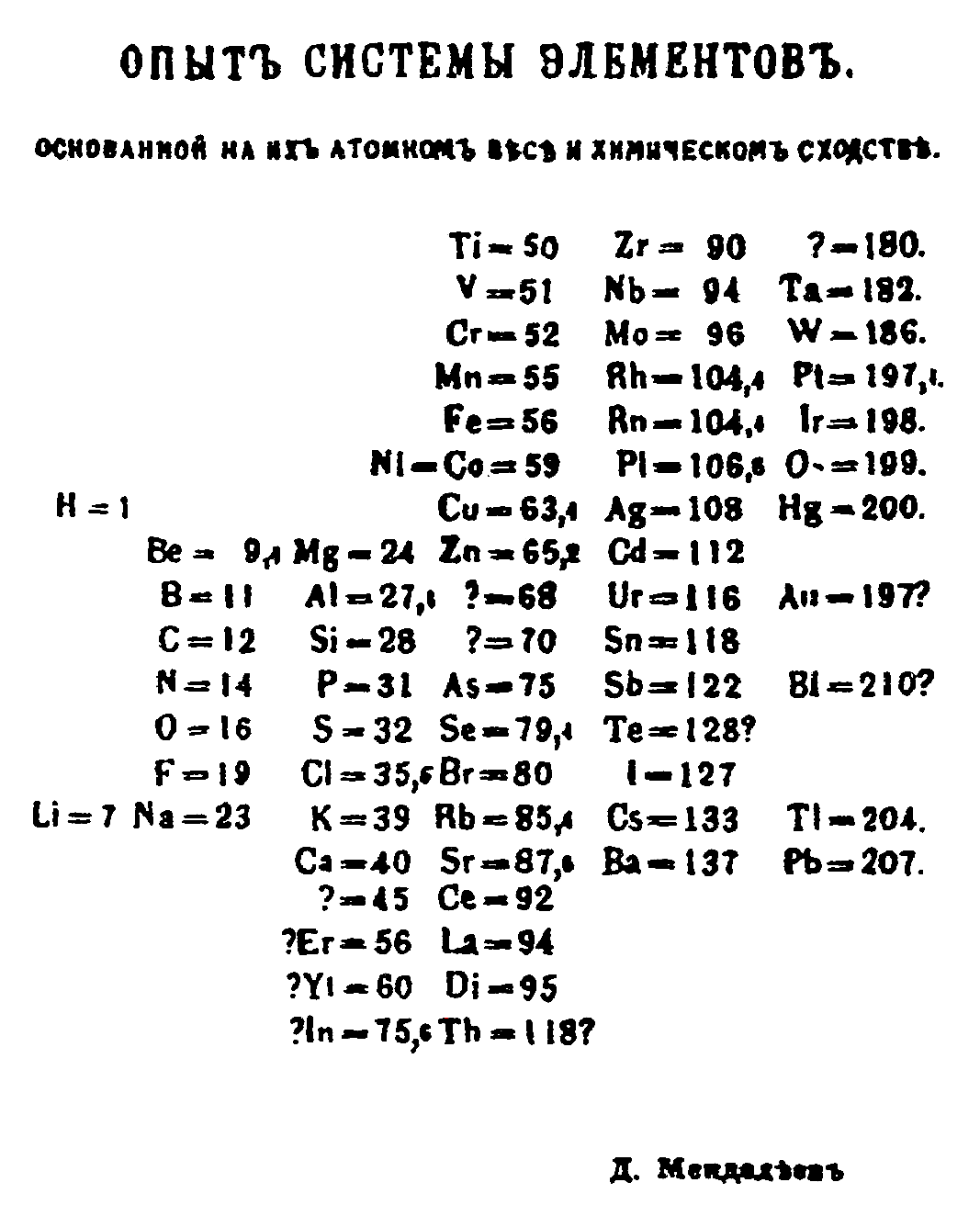
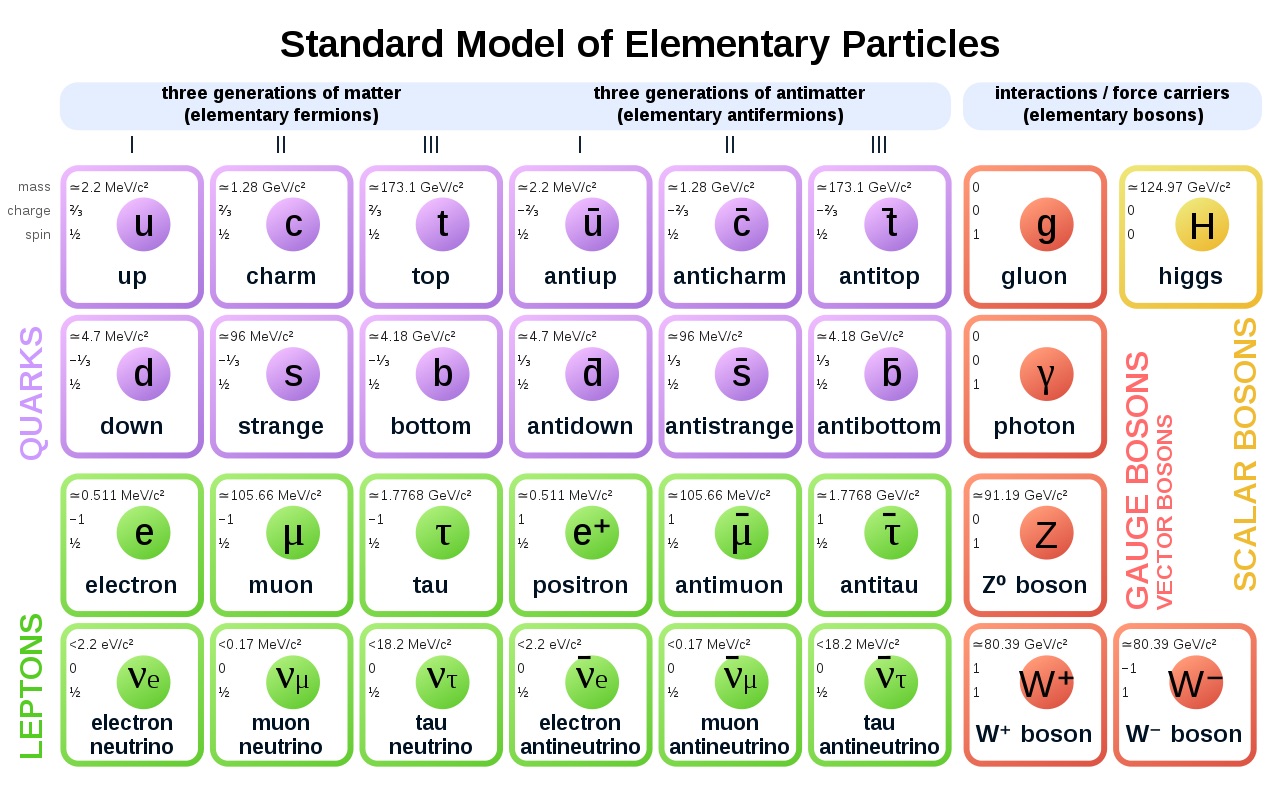


What’s a little remarkable to me is that he had these visions in this detail despite being lifelong blind.
As I was reading the article, I kept wondering which came first. Humans having visions of loved ones? Or the religions and stories that posit a posthumous reunion? I was theorizing that the visions were shaped by the individuals’ religious beliefs.
The article offered one piece of evidence that my theory was wrong. The doctor claimed that almost no one saw Jesus or any other divine entity in their near death dreams. If this is universally true, then the religious beliefs about death & heaven are shaped in part by the dreams and not vice versa.