There is no cure for blindness? What kind of blindness? Even a popular entertainer made news when curing 1,000 cataracts with a today's standard procedure. How would cataracts be cured 500 years ago? Bloodletting? Very soon (10 years, 20, maybe more) we will be able to restore full eyesight, even regrow eyes [1], and beyond.
But sure, cling to dusty metaphysics while sending messages at light speed across the entire planet with a detour in Low Earth Orbit using materials which were invented 116 years ago [2], it's your privilege.
> But sure, cling to dusty metaphysics while sending messages at light speed.
I do not understand what you mean by dusty metaphysics. I am guessing you mean religion? I can criticize science without endorsing religion. It is not either or. If that is the case, I believe you read into my comment things I did not say.
I already said science is great. At the same time, we hardly know anything. These are orthogonal. We are a bunch of apes on a rock in the middle of space.
Replacing religion with science is what (one of the things) Nietzsche was talking about. What a better example, ironically, that not being able to criticize Science.
In a funny way, by dusty metaphysics I actually meant the great Swiss philosopher Friedrich Nietzsche.
In Genealogy of Morals he has quotes such as "Science is not nearly independent…, in every respect it first needs a value-ideal, value-creating power, in whose service it can believe in itself,—science itself never creates values." [1] using the word wissenschaft for science, knowledge-making, translating literally the German word. The point was that we are already beyond any dreams Nietzsche could have imagined, the dichotomy religion/science was merely a cultural artefact of the Enlightenment. Hence the replacement you mention is not even an issue.
As for "hardly knowing anything", just looking at the front page of HN right now: we are discovering new water sources on the Moon [2], new primitive cells [3]. We are improving, however knowledge is not about totality (omni-scientia, as the religious terminology would put it). Even if we were to condense all the knowledge in one place, hoard it, it would only collapse into a black hole, our universe is rather limited. Knowledge is about principles: we will never again have to worry about the sun not rising tomorrow because we made the god of Sun angry (although we should worry that the Sun will evaporate Earth in a few billion years, so I suppose Nietzsche has his point [4]).
[4] 'Once upon a time, in some out of the way corner of that universe which is dispersed into numberless twinkling solar systems, there was a star upon which clever beasts invented knowing. That was the most arrogant and mendacious minute of "world history," but nevertheless, it was only a minute. After nature had drawn a few breaths, the star cooled and congealed, and the clever beasts had to die.', 1873, F. Nietzsche, On Truth and Lies in a Nonmoral Sense
Thanks for the detailed response. I will try my best to answer.
> science itself never creates values
I did not say I agree with Everything Nietzsche says. I disagree on that one.
> The point was that we are already beyond any dreams Nietzsche could have imagined, the dichotomy religion/science was merely a cultural artefact of the Enlightenment. Hence the replacement you mention is not even an issue.
Why are we already beyond any dreams Nietzsche could have imagined? You state it as fact but do not justify it.
The Hadron collider has not discovered many of the things people were hoping to. Mathematics optimism was demolished with Gödel. If anything, it feels like we need to put more and more effort to get less and less progress (diminishing returns).
IMHO it is fine, what else can we do, but I don't think it is a situation to brag about. This naïve positivity that Science will solve all problems _is_ the cultural artifact of the Enlightenment. By now the optimism has faded. In 150 years no more illnesses? Who can believe that, if we are not all dead from the environment or nuclear war.
But most importantly:
> As for "hardly knowing anything", just looking at the front page of HN right now
If instead of looking at hn we go to a hospital it will be obvious how little we know.
On Nietzsche's dreams, I guess ibuprofen comes to mind (discovered in 1961 by Stewart Adams and John Nicholson). How many of his headaches would have been easily relieved with just a pill. Chemistry was the fundamentally transformative science of the first part of the 20th century, Better Living Through Chemistry [1] and all that.
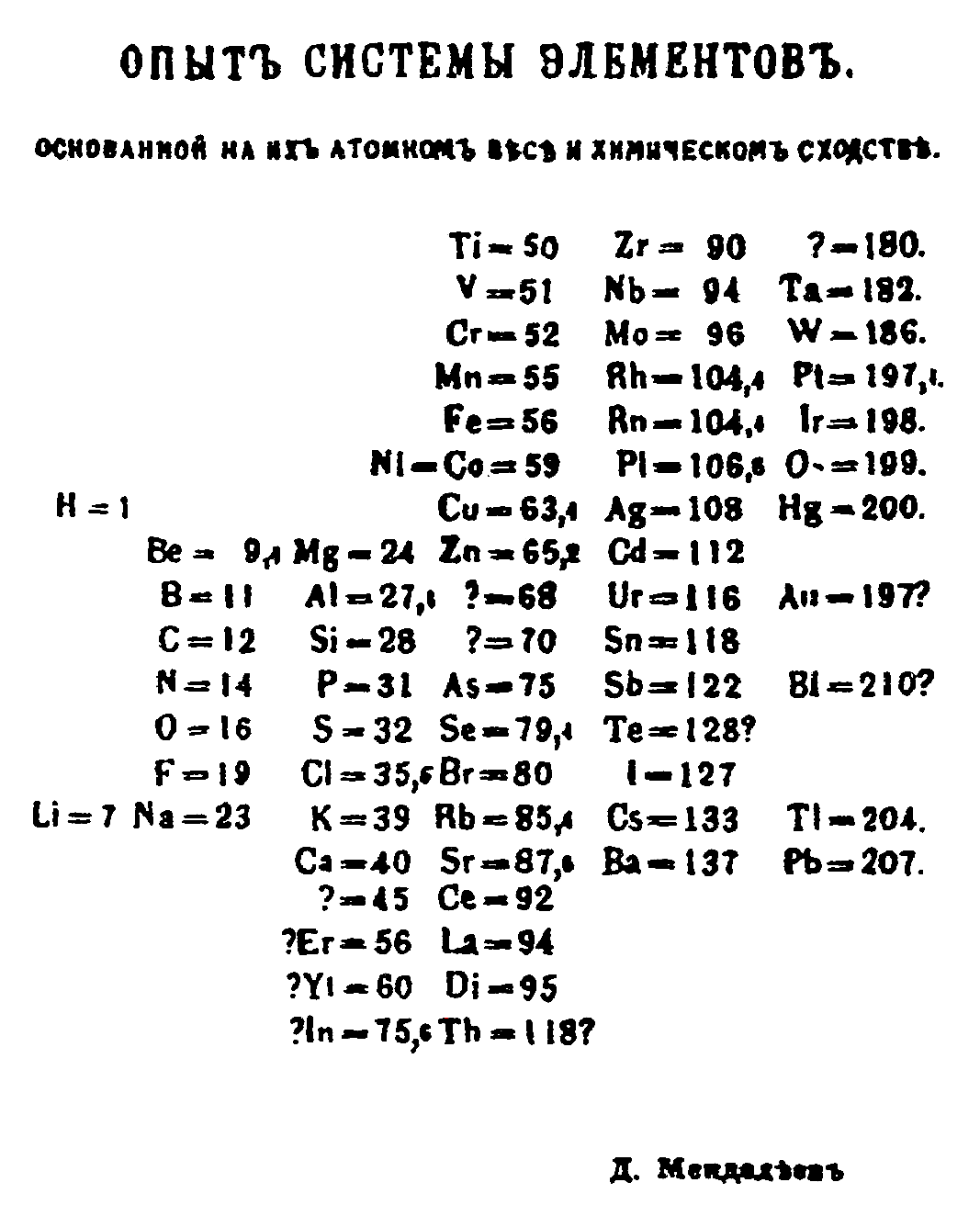
And Nietzsche knew that chemistry was the future, it was in the air. "In a letter of January 1869 to his close friend Erwin Rohde, Nietzsche, reflecting wryly on the vicissitudes of fate, breaks the news that has just intervened to dash their common 'dreams of a Parisian future': 'just last week I was going to write to you and suggest that we study chemistry together, that we throw philology where it belongs, among the household effects of our forefathers'" [2] However, he doesn't pursue chemistry, "In commenting on this same episode of 1869, Mittasch muses: what if Nietzsche had carried out his plan and begun studying chemistry, for instance with O.L. Erdmann and H. Kolbe in Leipzig: would we be counting him nowadays among our great German chemists?" [2], as we know, he falls back into philology and publishes The Birth of Tragedy in 1872. Incidentally, in 1869, apparently in one day, February 17, Dmitri Mendeleev conceived the first periodic table of the elements [3]. No one could have guessed the power that lies in those scribbles, and that's the point: if Nietzsche could have dreamed all the polymers and drugs of today he would have forgotten Greek and Latin.
Yes, in physics, plenty of "low hanging fruits" such as general relativity or black-body radiation have been picked early. The incompleteness theorems have crushed the mathematical optimism for only 5 years, from 1931 to 1936, when Turing showed that even without an algorithm to solve the halting problem, you can still build an computer, as we are well aware.
Hopefully not even 150 years to cure all illnesses, I'm hoping for 50 because, you know, the clock is ticking. The source for this hope is the work that is being done in regenerative medicine and in programmatic tissue control [4].
We're beyond what he imagined in technology and material possibilities, but not even close to other more human values.
The fact that we are both using this amazing technology of "light speed" information exchange to engage in these discussions fully knowing that most likely nothing will change on the other end, should tell you something about how far we've really come.
First of all, I am believer that language was not invented for communication, dogs and bees communicate very well with each other and don't speak one word, but that language was invented to speak with and to one's own self. No source for this, just a belief: I first of all speak to clarify thoughts for myself, hence expecting for communication to "update the software" of the other person just seems misguided.
Secondly, we are what we make of ourselves, nothing more, nothing less. We are a "land of laws" or a race to the bottom. José Saramago's fiction "Essay on Lucidity" and "Essay on Blindness" puts it in counterbalance more poetically and at length.
Thirdly, technologically, we still haven't moved one inch towards the tools for wisdom. What do we have now? Books of ancient elders, books of contemporary charismatic thought-leaders, books of law, "words, words, words", as the Danish prince would put it. How about, as dystopian or utopian that might sound, reinforce "do not kill" not with a stone tablet and the fear of consequences, but with a pill. Robert Sapolski [1] comes to mind: how barbaric we will look like for locking a murderer in a cell instead of fixing whatever neuronal pathway goes haywire. Nevertheless, this future will come, maybe not in the next 100 years, who knows, but that's why it is important for there to be a we, the people, collectively sorting things out, choosing our own local and global state, and not a them, the rulers, whomever them are, political leaders, religious figures, charismatic entertainers.
The first paragraph, although an interesting theory, is odd and almost self contradictory. If you don't expect anything to come out of interaction, why not just type your responses into an offline journal for yourself and keep it at that? I do this often for my future self and highly recommend it. But if I interact with others I try to be honest with my intentions.
I can't say I disagree with the rest of your comment but i barely see the relevance to the topic of Nietzsche and how you seemed misguided in confusing his vision of the future with our current technological advances.


But sure, cling to dusty metaphysics while sending messages at light speed across the entire planet with a detour in Low Earth Orbit using materials which were invented 116 years ago [2], it's your privilege.
[1] "Researchers restore lost sight in mice, offering clues to reversing aging. But many hurdles remain before approach can be tried in people", https://www.science.org/content/article/researchers-restore-...
[2] "In 1907 Leo Baekeland invented Bakelite, the first fully synthetic plastic, meaning it contained no molecules found in nature.", https://www.sciencehistory.org/the-history-and-future-of-pla....